G2X-TZ
Price range: $85.00 through $235.00
A lipidated 39-amino-acid dual agonist acting at the GIP and GLP-1 receptors, built on a GIP-analogue backbone, studied in metabolic research. Supplied as lyophilized powder, identity confirmed by mass spectrometry.
Description
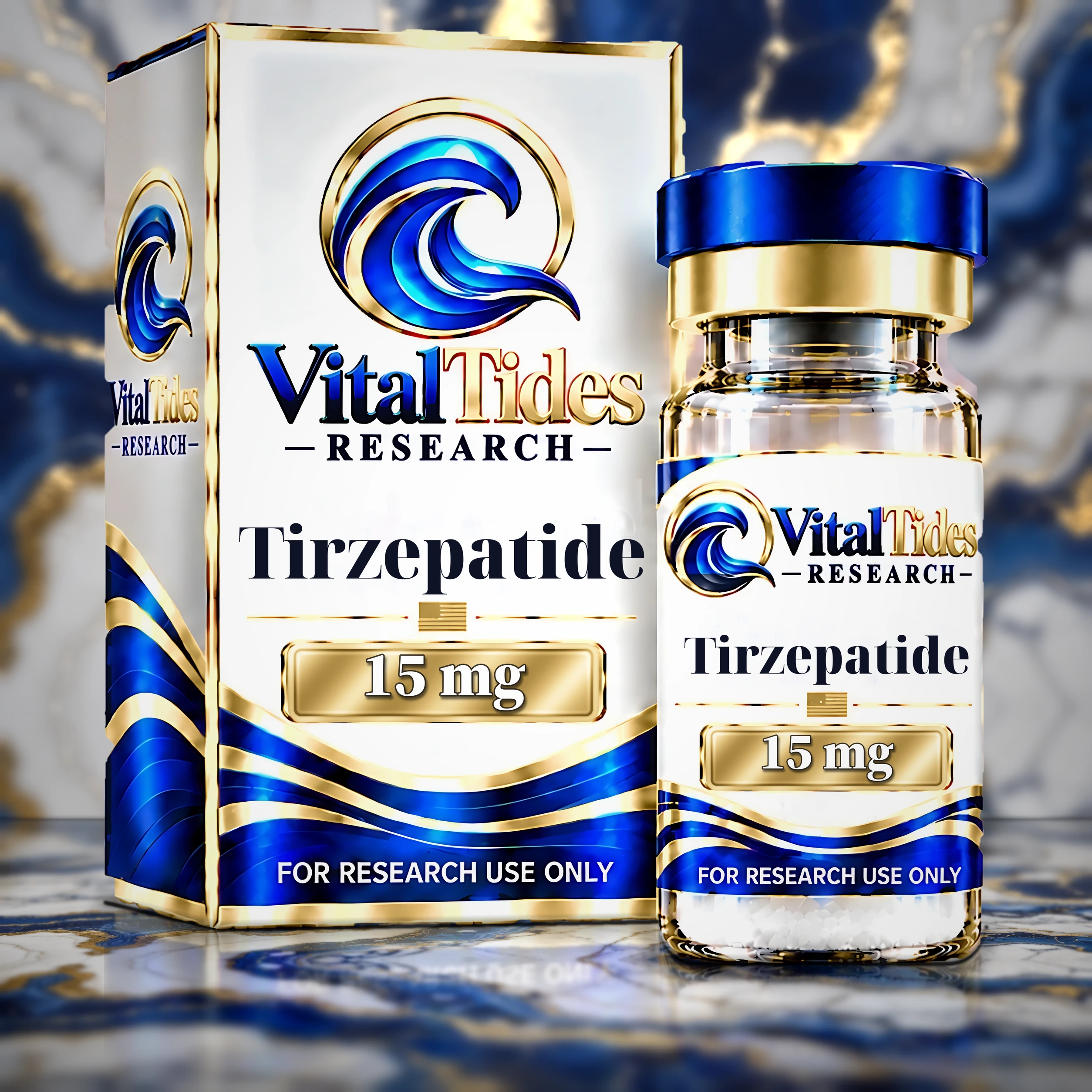
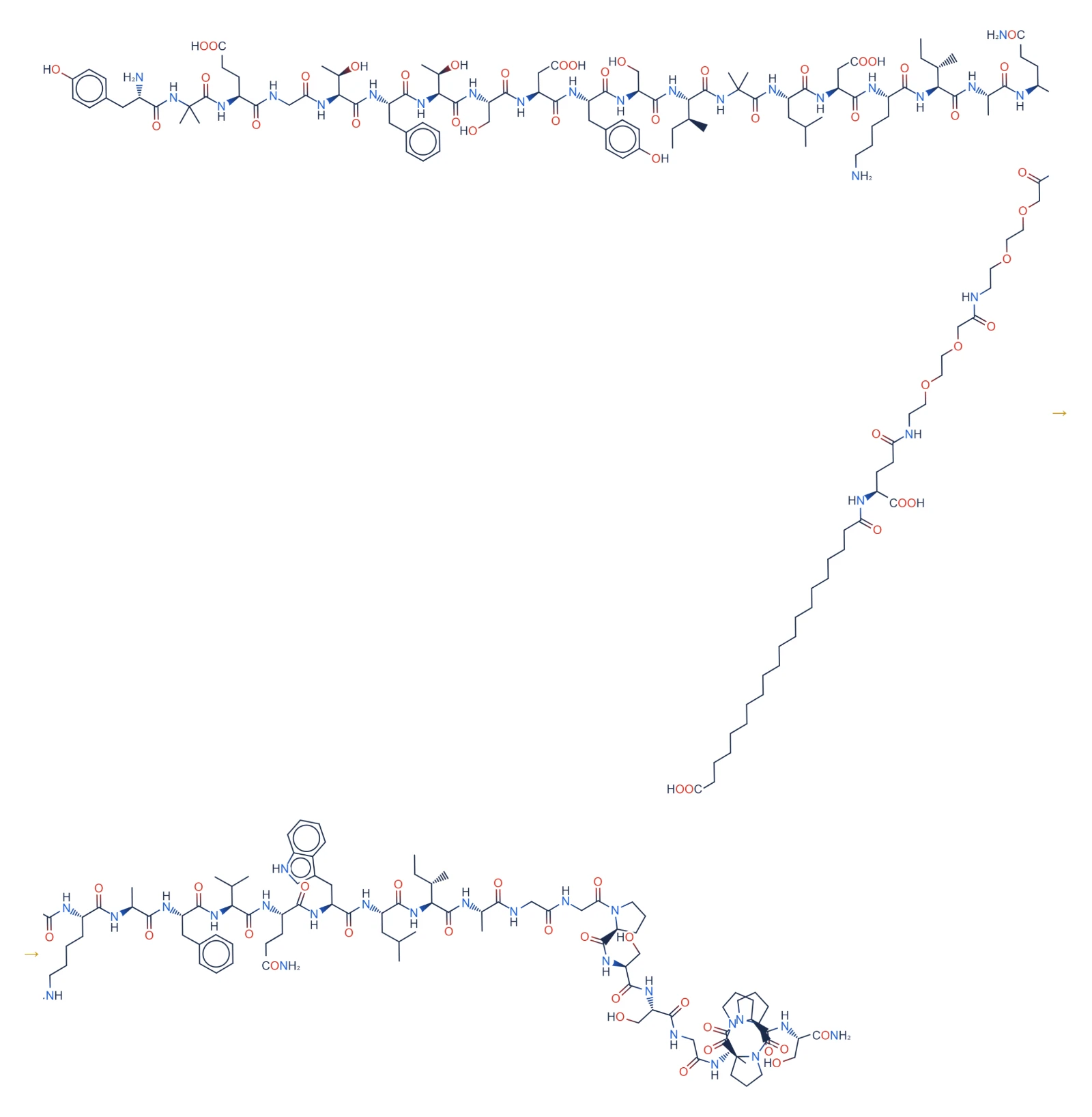
G2X-TZ is a 39-amino-acid synthetic peptide with a C-terminal amide and a molecular weight of approximately 4813 g/mol. It is a dual receptor agonist, acting at the GIP and GLP-1 receptors, and is also known in the literature as tirzepatide or LY3298176.
Structure
Unusually among incretin analogues, G2X-TZ is built on a GIP backbone rather than a GLP-1 one. This matters for how the molecule is classified: it is a GIP analogue engineered to also engage the GLP-1 receptor, not a GLP-1 analogue with GIP activity added.
Two structural modifications define its behaviour. Aminoisobutyric acid replaces natural residues at positions 2 and 13; the extra methyl group on this non-standard amino acid sterically blocks cleavage by dipeptidyl peptidase-4, the enzyme that degrades native incretins within minutes.
A C20 diacid fatty chain is conjugated to the lysine at position 20 through a gamma-glutamate linker followed by two AEEA spacer units. This lipid tail binds reversibly to serum albumin, creating a circulating reservoir that extends residence time by orders of magnitude.
It is worth comparing this with G3X-RT, also in this catalogue. Both are 39-residue lipidated peptides with Aib substitutions and a C20 diacid, but they differ in the details: G2X-TZ uses a doubled AEEA linker on Lys20 and engages two receptors, while G3X-RT uses a single AEEA on Lys17, adds alpha-methyl-leucine at position 13, and engages three. The two molecules are 82 daltons apart.
Dual agonism
The two receptors contribute differently in published descriptions. GLP-1 receptor signalling is associated with glucose-dependent insulin secretion and gastric emptying. GIP receptor signalling is associated with insulin response and adipose tissue handling, and its inclusion was for a long time considered counterintuitive, since GIP signalling had historically been viewed as unhelpful in metabolic contexts. Resolving that question is a substantial part of why the compound attracted research attention.
Research background
Published work has characterised receptor binding and activation at both targets in cell systems, examined metabolic parameters in animal models, and the compound has been through extensive human clinical investigation.
The material supplied here is for laboratory research only and is not an approved medicine in this form.
Storage and handling
Store the lyophilized powder at 36 to 46 °F (2 to 8 °C), desiccated and protected from light. Allow the vial to reach room temperature before opening.
Use 4813.45 g/mol for molar calculations on the free base.
Purity and verification
Each lot is analysed by an independent laboratory, with identity confirmed by mass spectrometry and purity by HPLC. Test scope varies by lot; consult the certificate for the lot you receive.
Additional information
| Vial Size | 15mg, 20mg, 30mg, 60mg |
|---|---|
| Format |
Related products
-
-
-

5 AMINO 1MQ
Price range: $60.00 through $100.00Quick ViewSelect options This product has multiple variants. The options may be chosen on the product page5 AMINO 1MQ
Price range: $60.00 through $100.00
A small-molecule NNMT inhibitor supplied as the iodide salt, studied in adipocyte and rodent metabolic models. Not a peptide; salt basis matters for concentration calculations.
-

G3X-RT
Price range: $135.00 through $200.00Quick ViewSelect options This product has multiple variants. The options may be chosen on the product pageG3X-RT
Price range: $135.00 through $200.00
A lipidated 39-amino-acid triple agonist acting at the GLP-1, GIP and glucagon receptors, studied in metabolic research. Supplied as lyophilized powder, identity confirmed by mass spectrometry.