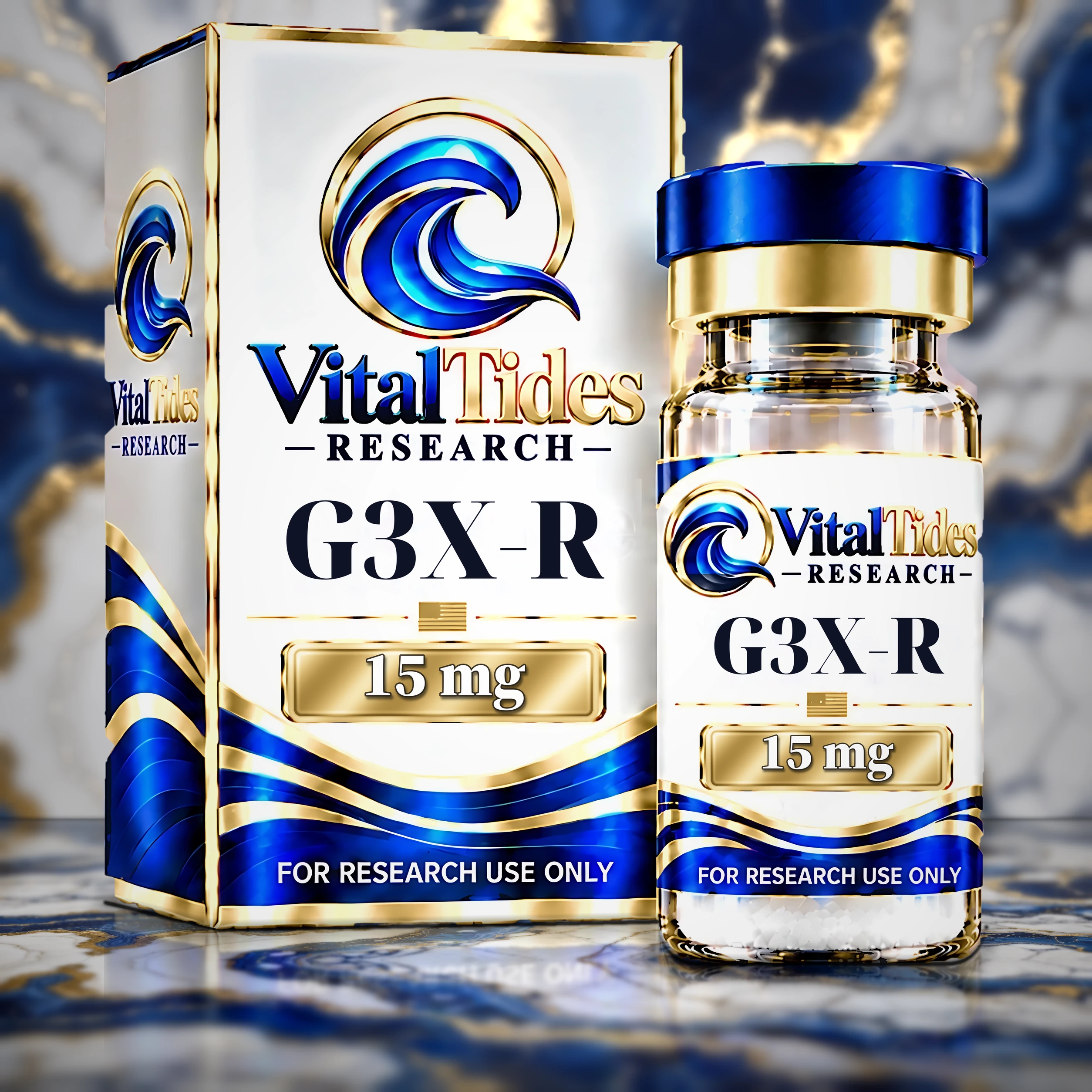
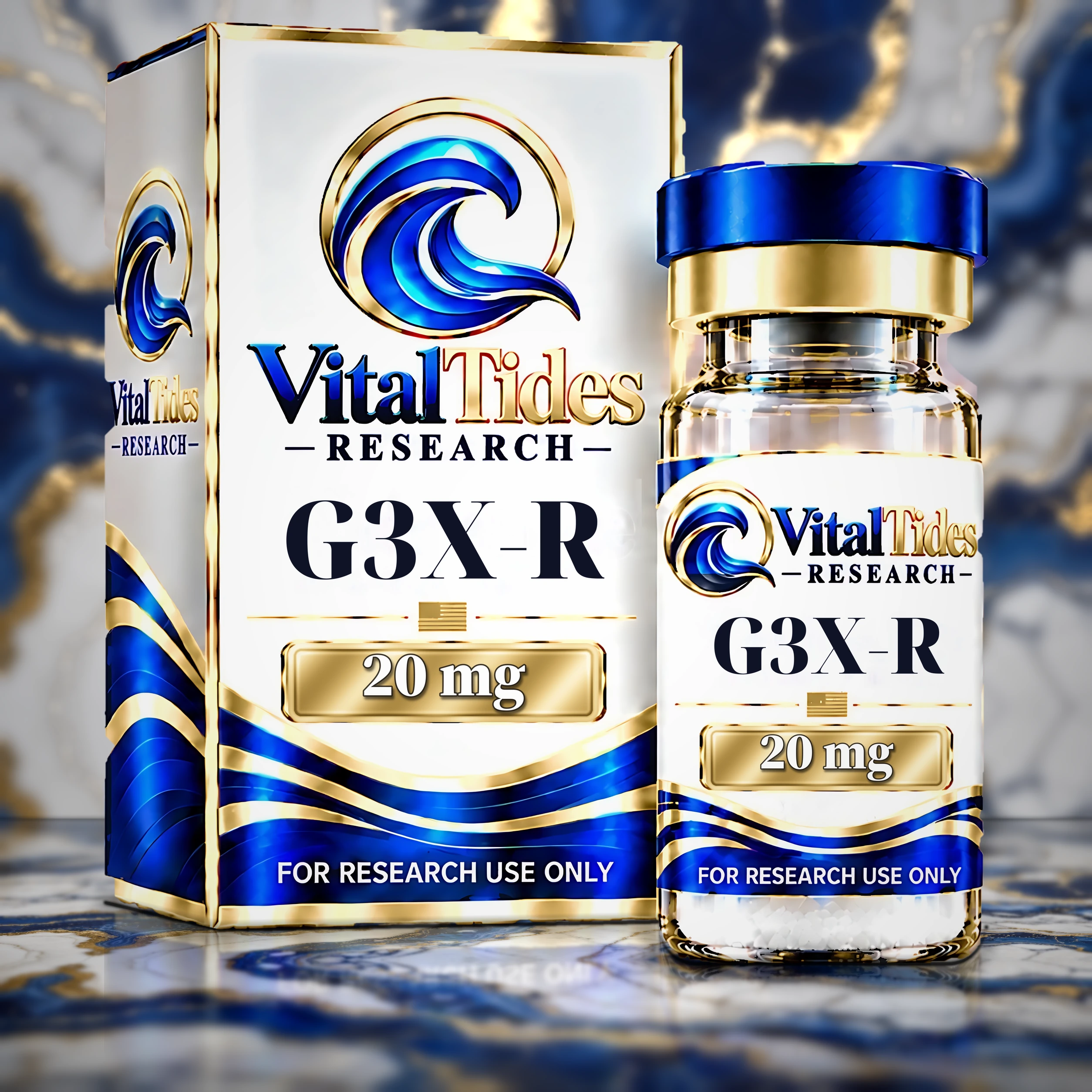
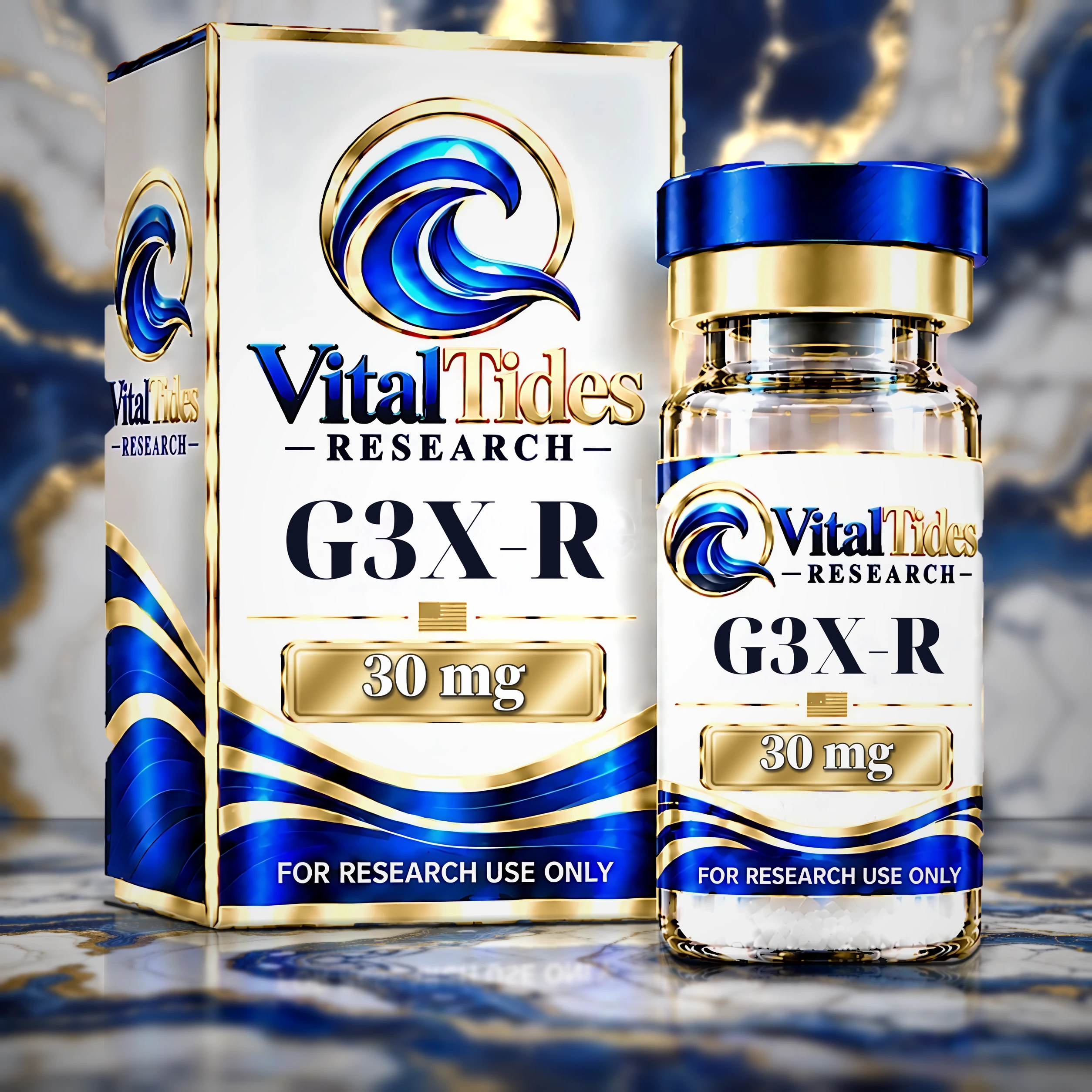
G3X-RT
Price range: $135.00 through $200.00
A lipidated 39-amino-acid triple agonist acting at the GLP-1, GIP and glucagon receptors, studied in metabolic research. Supplied as lyophilized powder, identity confirmed by mass spectrometry.
Description
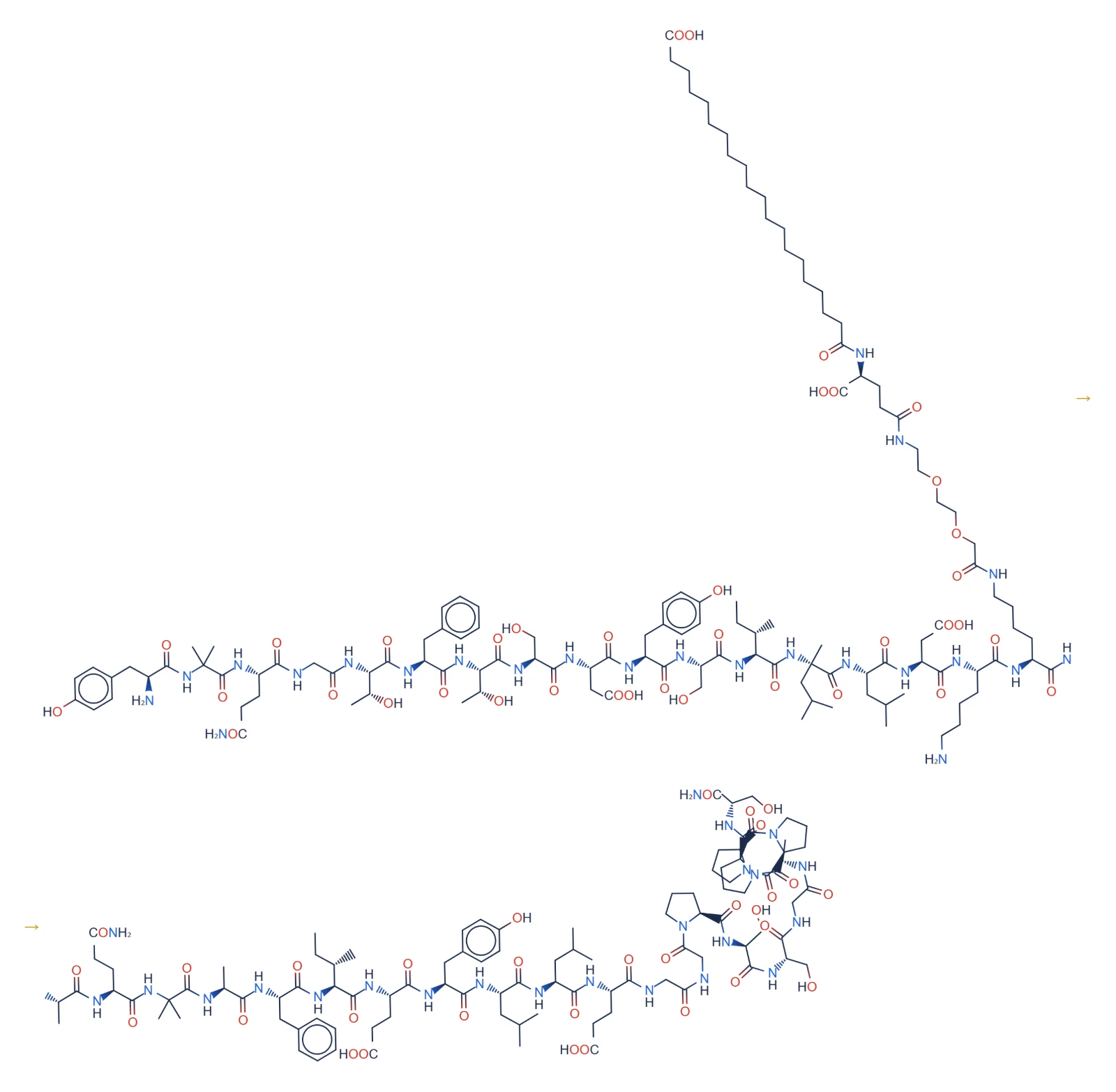
G3X-RT is a 39-amino-acid synthetic peptide with a C-terminal amide and a molecular weight of approximately 4731 g/mol. It is a triple receptor agonist, acting at the GLP-1, GIP and glucagon receptors, and is also known in the literature as retatrutide or LY3437943.
Structure
The molecule is built on a glucagon-family backbone with three deliberate modifications that distinguish it from the endogenous hormones it resembles.
First, aminoisobutyric acid replaces the natural residues at positions 2 and 20. Aib is a non-standard amino acid whose extra methyl group sterically blocks the enzyme dipeptidyl peptidase-4, which would otherwise cleave the peptide within minutes.
Second, position 13 carries alpha-methyl-leucine, a further non-standard substitution.
Third, and most consequentially for its behaviour, a C20 diacid fatty chain is conjugated to the lysine at position 17 through a gamma-glutamate and AEEA linker. This lipid tail binds serum albumin reversibly, creating a circulating depot that extends the peptide’s residence time from minutes to a scale measured in days. Lipidation of this kind is the principal design strategy behind the current generation of long-acting incretin analogues.
Triple agonism
What separates this molecule from earlier incretin analogues is the number of receptors engaged. Single agonists act at GLP-1 alone. Dual agonists such as G2X-TZ (tirzepatide) add GIP. G3X-RT adds the glucagon receptor as a third target.
The three receptors are described in the literature as contributing differently. GLP-1 receptor signalling is associated with insulin secretion and gastric emptying, GIP receptor signalling with insulin response and adipose tissue handling, and glucagon receptor signalling with hepatic glucose output and energy expenditure. Adding the third receptor is therefore a mechanistically distinct proposition rather than an incremental change, and it is the reason the compound is studied separately from dual agonists rather than as a variant of them.
Research background
Published work has characterised receptor binding and activation across all three targets in cell systems, with reported potency differing between them. Further work has examined metabolic parameters in animal models, and the compound has been the subject of human clinical investigation.
Researchers should note that clinical investigation is not approval. No regulatory authority has approved this compound for any use, and the material supplied here is for laboratory research only.
Storage and handling
Store the lyophilized powder at 36 to 46 °F (2 to 8 °C), desiccated and protected from light. Allow the vial to reach room temperature before opening.
Use 4731.33 g/mol for molar calculations. Note that this is a large molecule, so a given mass yields a small molar quantity relative to the short peptides in this catalogue.
Purity and verification
Each lot is analysed by an independent laboratory, with identity confirmed by mass spectrometry and purity by HPLC. Test scope varies by lot; consult the certificate for the lot you receive.
Additional information
| Vial Size | 15mg, 20mg, 30mg |
|---|---|
| Format |
Related products
-

G2X-TZ
Price range: $85.00 through $235.00Quick ViewSelect options This product has multiple variants. The options may be chosen on the product pageG2X-TZ
Price range: $85.00 through $235.00
A lipidated 39-amino-acid dual agonist acting at the GIP and GLP-1 receptors, built on a GIP-analogue backbone, studied in metabolic research. Supplied as lyophilized powder, identity confirmed by mass spectrometry.
-
-
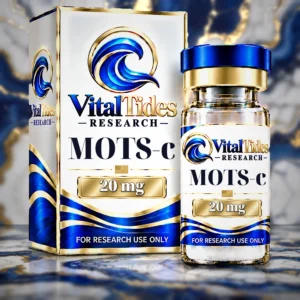
MOTS-C
Price range: $115.00 through $160.00Quick ViewSelect options This product has multiple variants. The options may be chosen on the product pageMOTS-C
Price range: $115.00 through $160.00
A 16-amino-acid mitochondrial-derived peptide encoded within the 12S rRNA gene, studied in preclinical work on AMPK signalling, glucose handling and metabolic regulation.
-

5 AMINO 1MQ
Price range: $60.00 through $100.00Quick ViewSelect options This product has multiple variants. The options may be chosen on the product page5 AMINO 1MQ
Price range: $60.00 through $100.00
A small-molecule NNMT inhibitor supplied as the iodide salt, studied in adipocyte and rodent metabolic models. Not a peptide; salt basis matters for concentration calculations.