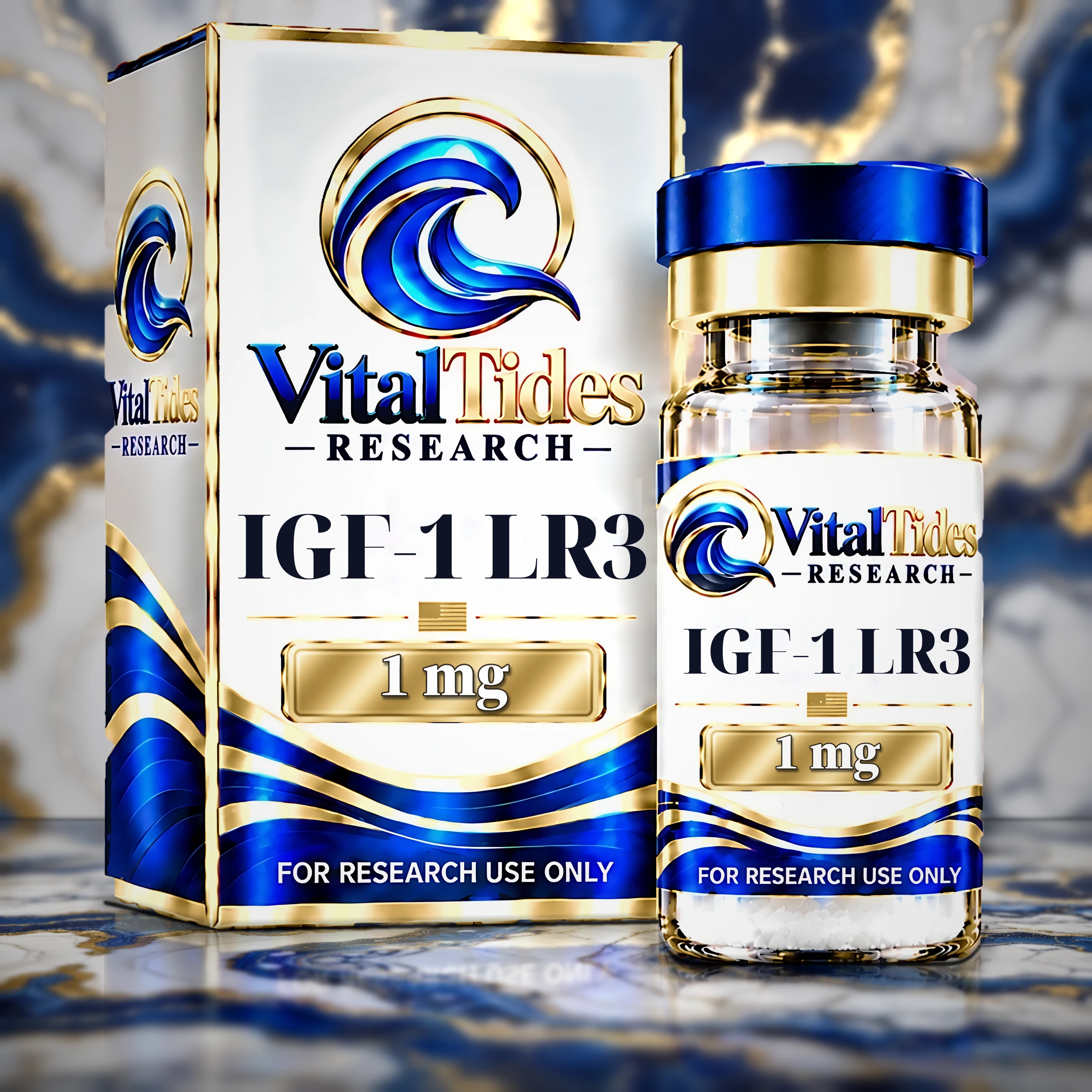
IGF-1 LR3
$95.00
1000 in stock
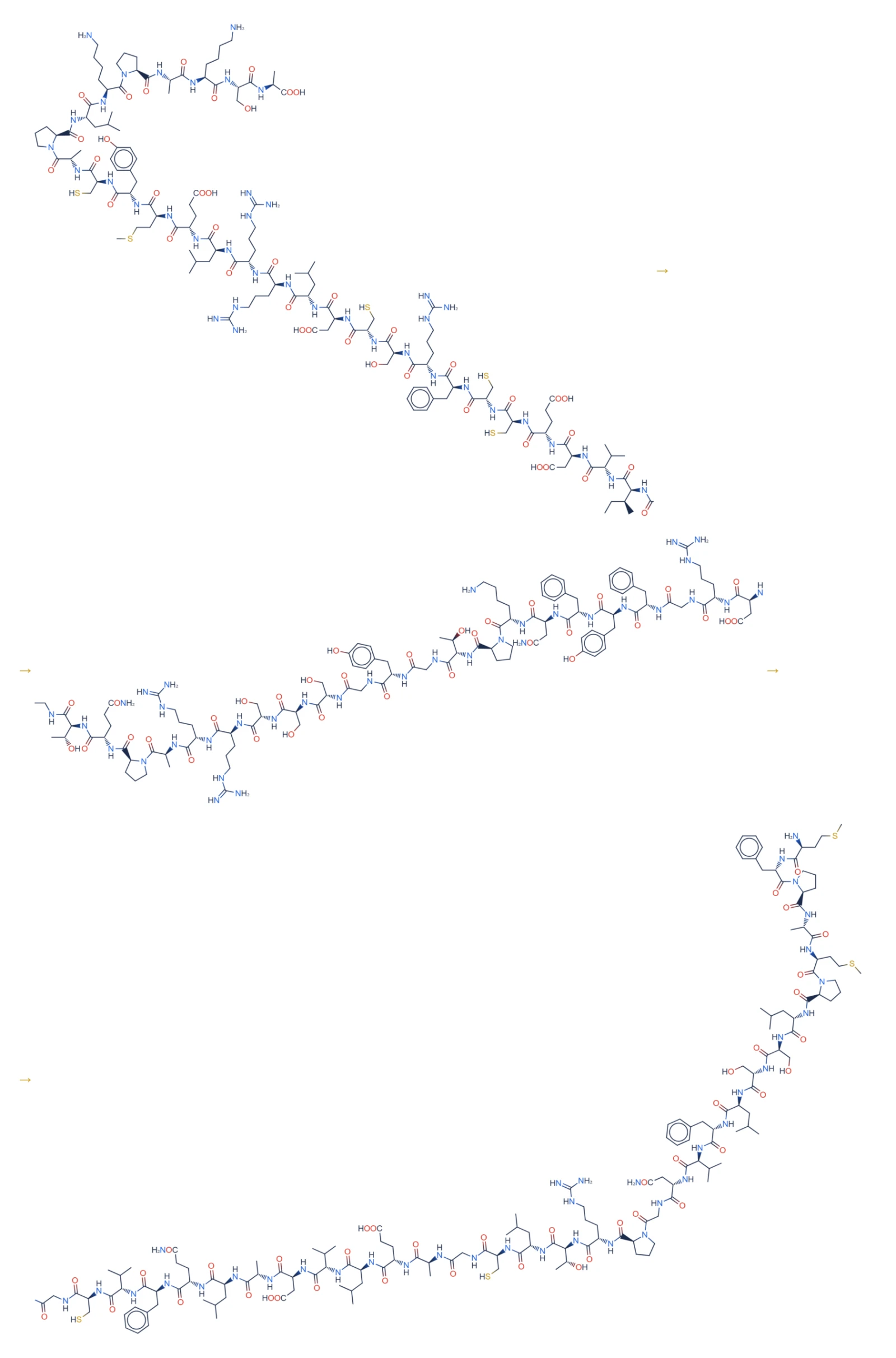
A recombinant 83-amino-acid IGF-1 analogue with an Arg3 substitution and 13-residue N-terminal extension, reducing binding-protein affinity. Expressed in E. coli; store below 0 °F (−18 °C).
Description
IGF-1 LR3 is a recombinant protein of 83 amino acids with a molecular weight of approximately 9118 g/mol, or 9.1 kDa. It is an engineered analogue of insulin-like growth factor 1, and is also written as Long R3 IGF-1.
A protein, not a peptide
At 83 residues this is considerably larger than anything else in this catalogue and is properly described as a protein rather than a peptide. That distinction has practical consequences.
It is produced by recombinant expression in Escherichia coli rather than by chemical synthesis, which is how every other product here is made. Recombinant proteins carry different quality considerations: correct folding, absence of host-cell protein and endotoxin, and batch-to-batch consistency in ways that solid-phase synthesis does not encounter. It is also non-glycosylated, since bacterial expression systems do not glycosylate.
Larger proteins are additionally more prone to denaturation from heat, shear and surface contact than short synthetic peptides, so handling matters more here than elsewhere in this catalogue.
What the modifications do
Native IGF-1 is 70 residues. LR3 adds two changes.
The Arg3 substitution replaces the glutamic acid at position three with arginine. This position is involved in binding to IGF binding proteins, and the substitution substantially reduces that affinity. Since binding proteins normally sequester the great majority of circulating IGF-1, reducing that interaction leaves more of the protein unbound.
The Long portion adds a 13-residue extension at the N-terminus, further reducing binding protein affinity and improving stability in expression.
Together these produce an analogue described in published work as having greater metabolic stability and higher free availability than the native protein. Both modifications address the same target: the binding proteins, not the receptor.
Research background
Published work has characterised receptor binding and activation at the IGF-1 receptor in cell systems, examined reduced affinity for binding proteins relative to native IGF-1, and used the analogue widely as a cell culture supplement where its binding-protein independence is an experimental advantage.
No regulatory authority has approved IGF-1 LR3 for any use in humans. The material supplied here is for laboratory research only.
Storage and handling
Store the lyophilized protein below 0 °F (−18 °C), desiccated. This is colder than most products in this catalogue.
Use 9117.6 g/mol for molar calculations. Because the mass is high, a given weight yields a small molar quantity relative to the short peptides here.
Purity and verification
Each lot is analysed by an independent laboratory. Test scope varies by lot; consult the certificate for the lot you receive.
Some suppliers list 946870-92-4 for the same material; registry coverage is inconsistent for this analog.
Additional information
| Vial Size | 1mg |
|---|---|
| Format |
Related products
-
TESAMORELIN
Price range: $80.00 through $150.00Quick ViewSelect options This product has multiple variants. The options may be chosen on the product pageTESAMORELIN
Price range: $80.00 through $150.00
A 44-amino-acid GHRH analogue with an N-terminal hexenoyl group blocking DPP-4 cleavage, studied in growth hormone secretion research.
-

TESAMORELIN / IPAMORELIN BLEND
Price range: $150.00 through $175.00Quick ViewSelect options This product has multiple variants. The options may be chosen on the product pageTESAMORELIN / IPAMORELIN BLEND
Price range: $150.00 through $175.00
A two-component preparation of tesamorelin and ipamorelin in one lyophilized vial, pairing a stabilised GHRH analogue with a ghrelin-receptor secretagogue. Studied in growth hormone secretion research.
-

-