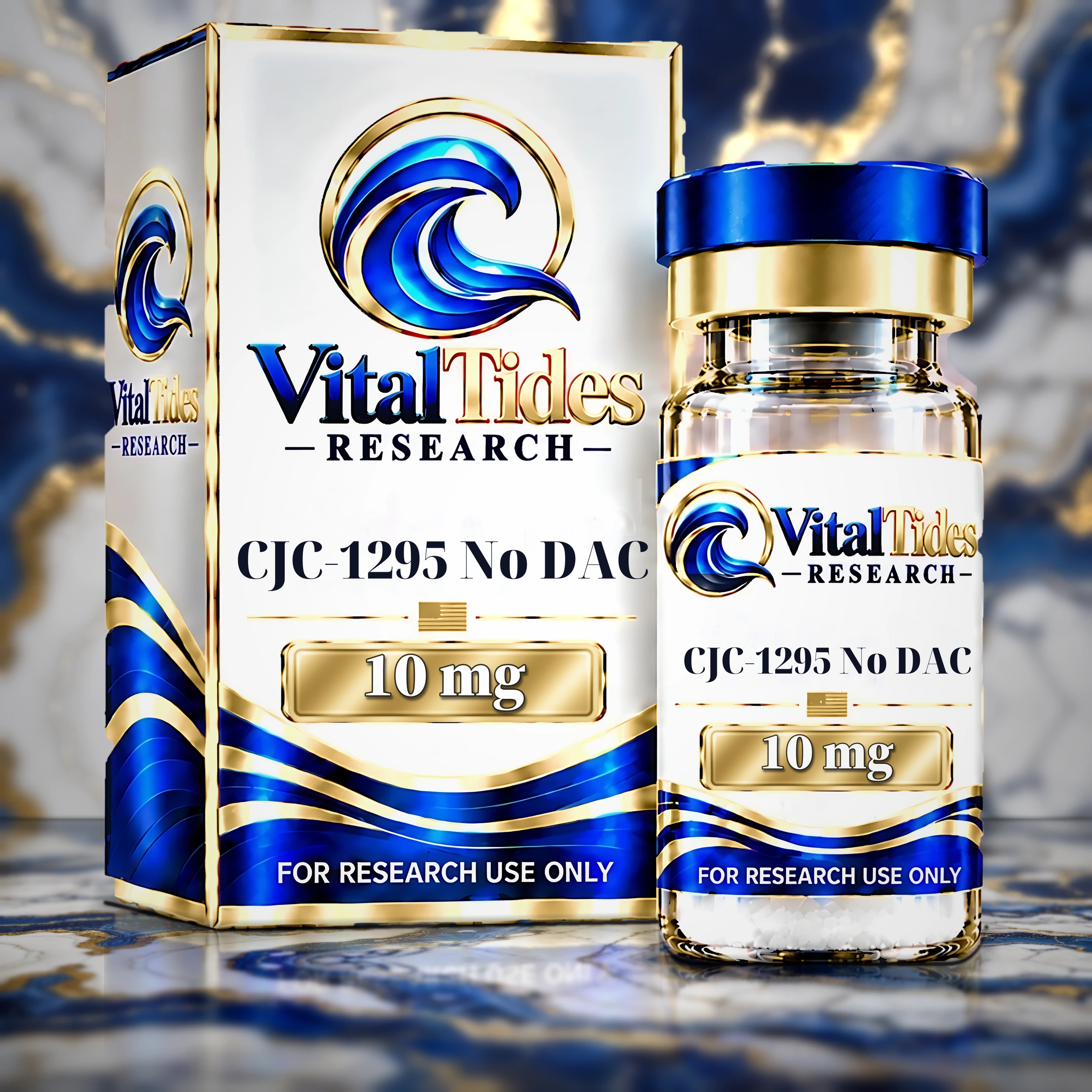
CJC-1295 NO DAC
$65.00
1000 in stock
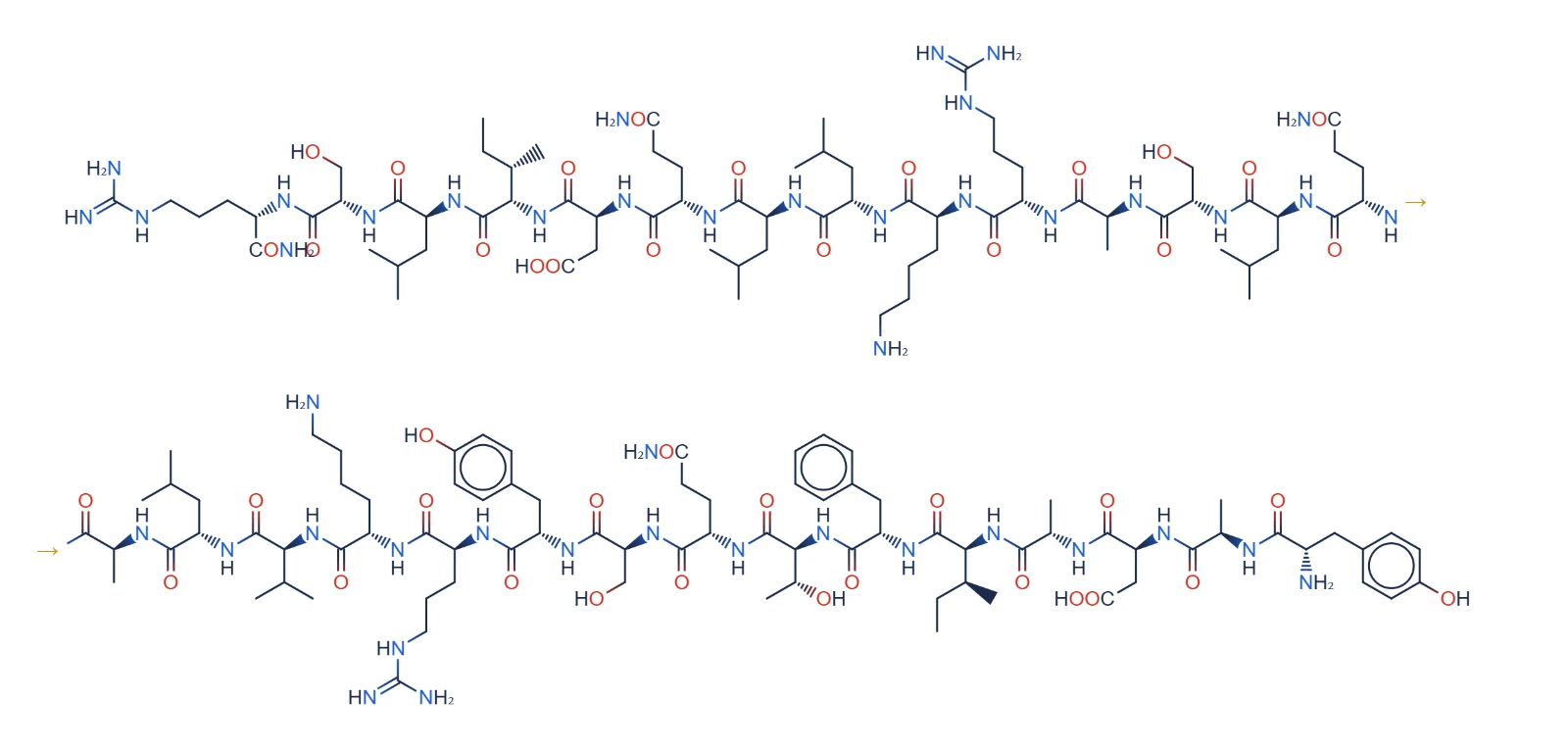
Modified GRF (1-29), a 29-amino-acid GHRH analogue with four stabilising substitutions and no DAC conjugate. Studied in growth hormone secretion research.
Description
CJC-1295 without DAC is a 29-amino-acid synthetic peptide with a C-terminal amide and a molecular weight of approximately 3368 g/mol. It is a growth hormone-releasing hormone analogue, and is more precisely described as Modified GRF (1-29).
What the name means
This is one of the more confusingly named compounds in the field, and the distinctions are worth stating plainly.
The parent sequence is GRF(1-29), the first 29 residues of human growth hormone-releasing hormone. This fragment retains the receptor-binding activity of the full 44-residue hormone, so the remaining 15 residues are not required for function.
Modified GRF (1-29) applies four substitutions to that fragment: D-alanine at position 2, glutamine at 8, alanine at 15 and leucine at 27. These are not arbitrary. The D-alanine at position 2 blocks dipeptidyl peptidase-4 cleavage, the substitution at 8 removes an asparagine prone to deamidation, and the changes at 15 and 27 address other degradation-prone residues. The result is a peptide substantially more stable than the unmodified fragment.
The DAC distinction. CJC-1295 with DAC carries an additional drug affinity complex, a maleimide group that binds covalently to serum albumin and extends the half-life to a scale of days. The version supplied here has no DAC. It is the modified fragment alone, with a much shorter duration of action. The two are routinely confused, sometimes listed under the same CAS number by suppliers, and they behave very differently. If a source does not specify DAC status, the listing is incomplete.
Relationship to the other GH compounds in this catalogue
Like tesamorelin, this is a GHRH analogue acting at the growth hormone-releasing hormone receptor. Tesamorelin takes a different approach to the same problem: it keeps the full 44-residue sequence and adds a single N-terminal acyl group, where Modified GRF shortens the sequence and substitutes four residues.
Both act at a different receptor from the secretagogues ipamorelin and hexarelin, which engage the ghrelin receptor. That independence is the rationale behind the combined preparations offered in this catalogue.
Research background
Published work has characterised receptor binding and activation in cell systems and examined growth hormone response in animal models, including comparisons between the modified fragment and the unmodified parent sequence. No regulatory authority has approved this compound, and the material supplied here is for laboratory research only.
Storage and handling
Store the lyophilized powder at 36 to 46 °F (2 to 8 °C), desiccated and protected from light. Allow the vial to reach room temperature before opening.
Purity and verification
Each lot is analysed by an independent laboratory, with identity confirmed by mass spectrometry and purity by HPLC. Test scope varies by lot; consult the certificate for the lot you receive.
Additional information
| Vial Size | 10mg |
|---|---|
| Format |
Related products
-

-
-

CJC-1295 NO DAC / IPAMORELIN
Price range: $70.00 through $140.00Quick ViewSelect options This product has multiple variants. The options may be chosen on the product pageCJC-1295 NO DAC / IPAMORELIN
Price range: $70.00 through $140.00
A two-component preparation of CJC-1295 No DAC (Mod GRF 1-29) and ipamorelin in one lyophilized vial, pairing a GHRH analogue with a ghrelin-receptor secretagogue. Studied in growth hormone secretion research.
-
TESAMORELIN
Price range: $80.00 through $150.00Quick ViewSelect options This product has multiple variants. The options may be chosen on the product pageTESAMORELIN
Price range: $80.00 through $150.00
A 44-amino-acid GHRH analogue with an N-terminal hexenoyl group blocking DPP-4 cleavage, studied in growth hormone secretion research.