
GLOW
Price range: $95.00 through $105.00
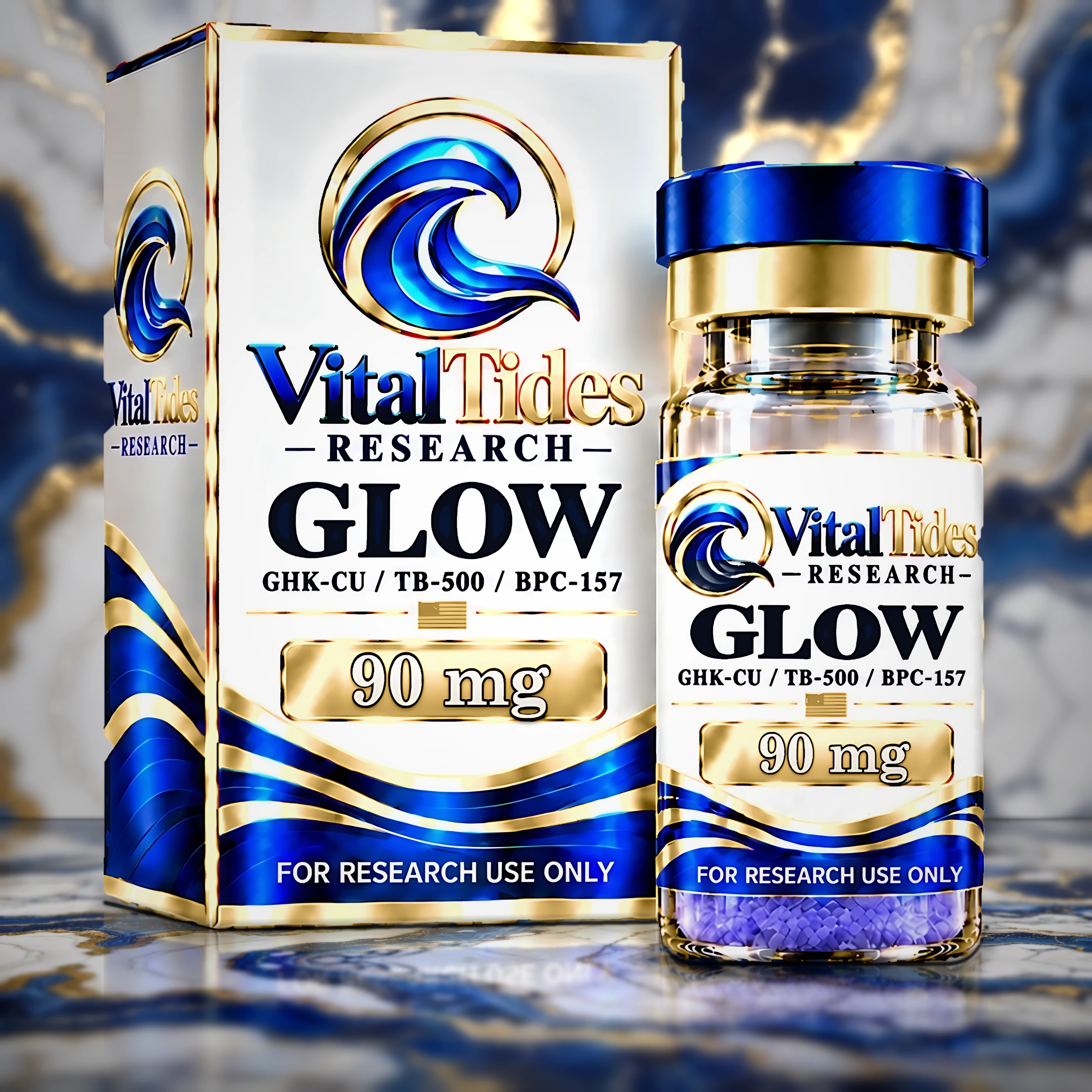
A three-component preparation of GHK-Cu, BPC-157 and TB-500 (Ac-LKKTETQ) in one lyophilized vial. Blue powder from the copper complex; all three components confirmed by LC-MS.
Description
GLOW is a three-component preparation containing GHK-Cu, BPC-157 and TB-500 in a single lyophilized vial. The copper content of the GHK-Cu component gives the powder its characteristic blue colour.
What is in the vial
The first component is GHK-Cu, the copper(II) complex of the tripeptide glycyl-L-histidyl-L-lysine, at 403.93 g/mol. This is the copper complex, CAS 89030-95-5, not the metal-free tripeptide at 340.38 g/mol that is sometimes sold under a similar name.
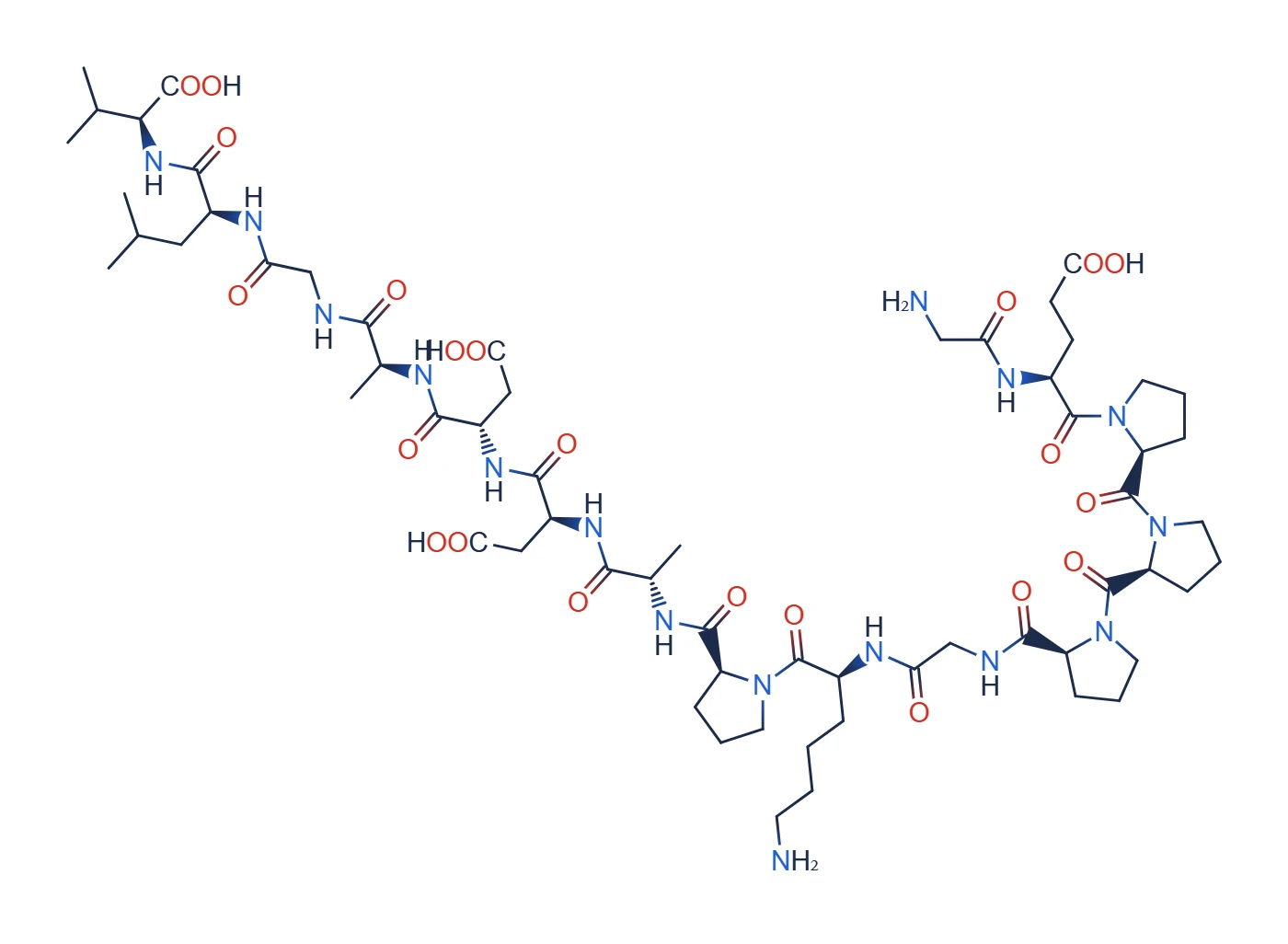
The second component is BPC-157, a 15-amino-acid peptide of sequence GEPPPGKPADDAGLV at 1419.55 g/mol.
The third component is TB-500, supplied as the acetylated seven-residue peptide Ac-LKKTETQ (residues 17–23 of thymosin β4), approximately 889 g/mol.
Identity of all three components has been confirmed by liquid chromatography with mass spectrometry. Because this is a blend, no single CAS number, molecular formula or molecular weight applies to the product. Each component is listed separately in the identity tables below, and the lot certificate reports the measured mass of each.
Research background
The three components are studied in overlapping areas but are described as acting through different mechanisms, and it is worth understanding each separately rather than treating the blend as a single agent.
GHK-Cu has the longest research history of the three, dating to the 1970s. Published in vitro work has examined extracellular matrix components, with a considerable body of study on collagen and glycosaminoglycan synthesis in fibroblast cultures, alongside transcriptomic work reporting altered expression across a large number of human genes in cultured cells. Its copper content also gives it redox behaviour that free peptides do not have.
BPC-157 has been examined in tendon-derived fibroblast cultures, in growth factor receptor expression, and in angiogenic signalling through vascular endothelial growth factor receptor 2 and downstream nitric oxide pathways.
That sequence is the actin-binding region of thymosin β4, an actin-sequestering protein. It maintains a pool of unpolymerised monomeric actin within the cell, participating in the regulation of cytoskeletal assembly that governs cell shape and migration.
The rationale for combining the three is complementary mechanism, with each addressing a different stage of the same process. GHK-Cu acts on the extracellular matrix, associated in published work with collagen and glycosaminoglycan synthesis and with broad changes in gene expression, and delivers copper as a cofactor for matrix-remodelling enzymes. BPC-157 acts on growth factor receptor signalling and angiogenic pathways, governing vascular supply. TB-500, derived from the actin-binding region of thymosin β4, targets the actin cytoskeleton, governing cell migration. Matrix, vasculature and cell mobilisation are distinct, non-overlapping routes, and that complementary-pathway relationship is the standard rationale for formulating the three together.
Limits of the evidence
None of the three components is approved by any regulatory authority for use in humans. The literature is overwhelmingly in vitro and rodent work, and findings in those systems frequently do not translate to other species.
Storage and handling
Store the lyophilized powder at 36 to 46 °F (2 to 8 °C), desiccated and protected from light. Allow the vial to reach room temperature before opening.
Avoid buffers containing EDTA or other chelating agents, which will strip copper from the GHK-Cu component and change both its identity and its mass.
The three components span a wide mass range, from roughly 404 to 1420 g/mol, a factor of about 3.5. Equal masses therefore give very different molar quantities. Calculate each component separately using the molecular weights below together with the measured content figures on your lot certificate.
Purity and verification
Each lot is analysed by an independent laboratory, with identity confirmed by mass spectrometry, purity by HPLC, and per-component content reported separately. Test scope varies by lot; consult the certificate for the lot you receive.
GHK
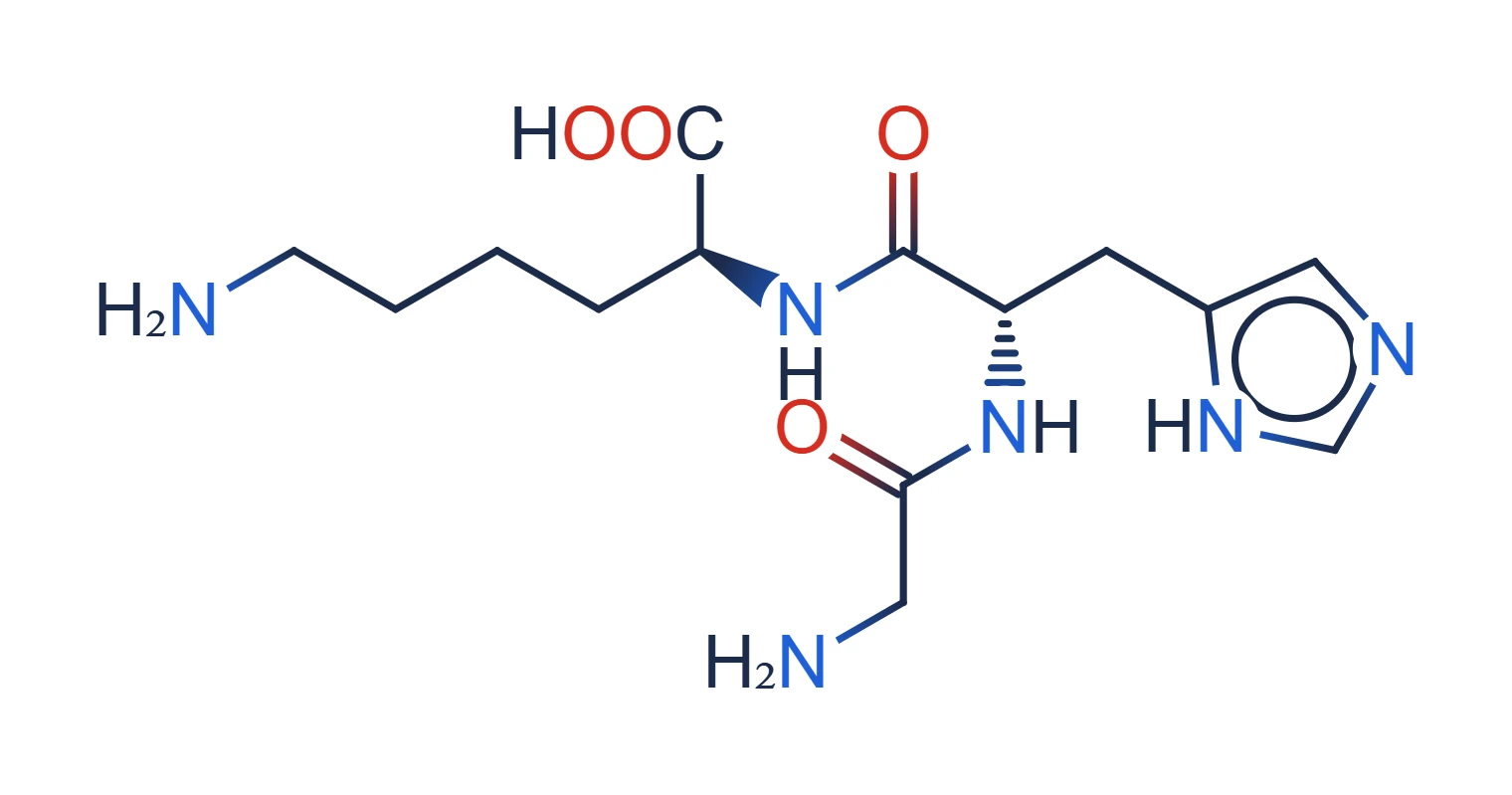
Ac-LKKTETQ
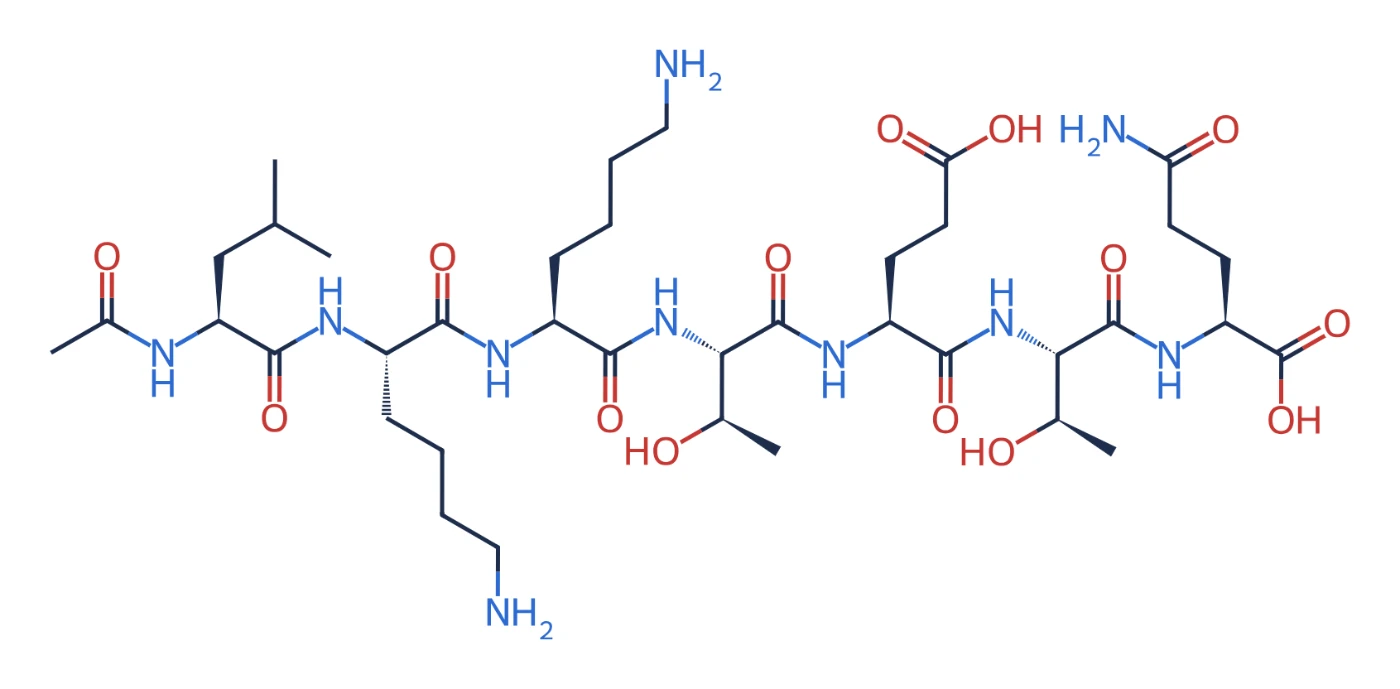
This is a three-component blend. No single CAS number, molecular formula or molecular weight applies to the combined product — each compound is listed separately above. Refer to the lot certificate of analysis for the mass of each component per vial.
Additional information
| Vial Size | 70mg, 90mg |
|---|---|
| Format |
Related products
-

-

WOLVERINE
Price range: $80.00 through $165.00Quick ViewSelect options This product has multiple variants. The options may be chosen on the product pageWOLVERINE
Price range: $80.00 through $165.00
A two-component preparation of BPC-157 and TB-500 (Ac-LKKTETQ) in one lyophilized vial, supplied for in-vitro laboratory research. Identity of both components confirmed by LC-MS.
-

TB-500
Price range: $65.00 through $140.00Quick ViewSelect options This product has multiple variants. The options may be chosen on the product pageTB-500
Price range: $65.00 through $140.00
TB-500 (Ac-LKKTETQ), the acetylated seven-residue actin-binding fragment of thymosin beta-4 (residues 17–23), supplied as a lyophilized powder for research use only.
-

ARA-290
Price range: $60.00 through $70.00Quick ViewSelect options This product has multiple variants. The options may be chosen on the product pageARA-290
Price range: $60.00 through $70.00
An 11-amino-acid peptide from the helix B surface of erythropoietin, engineered to engage tissue-protective signalling without erythropoietic activity.