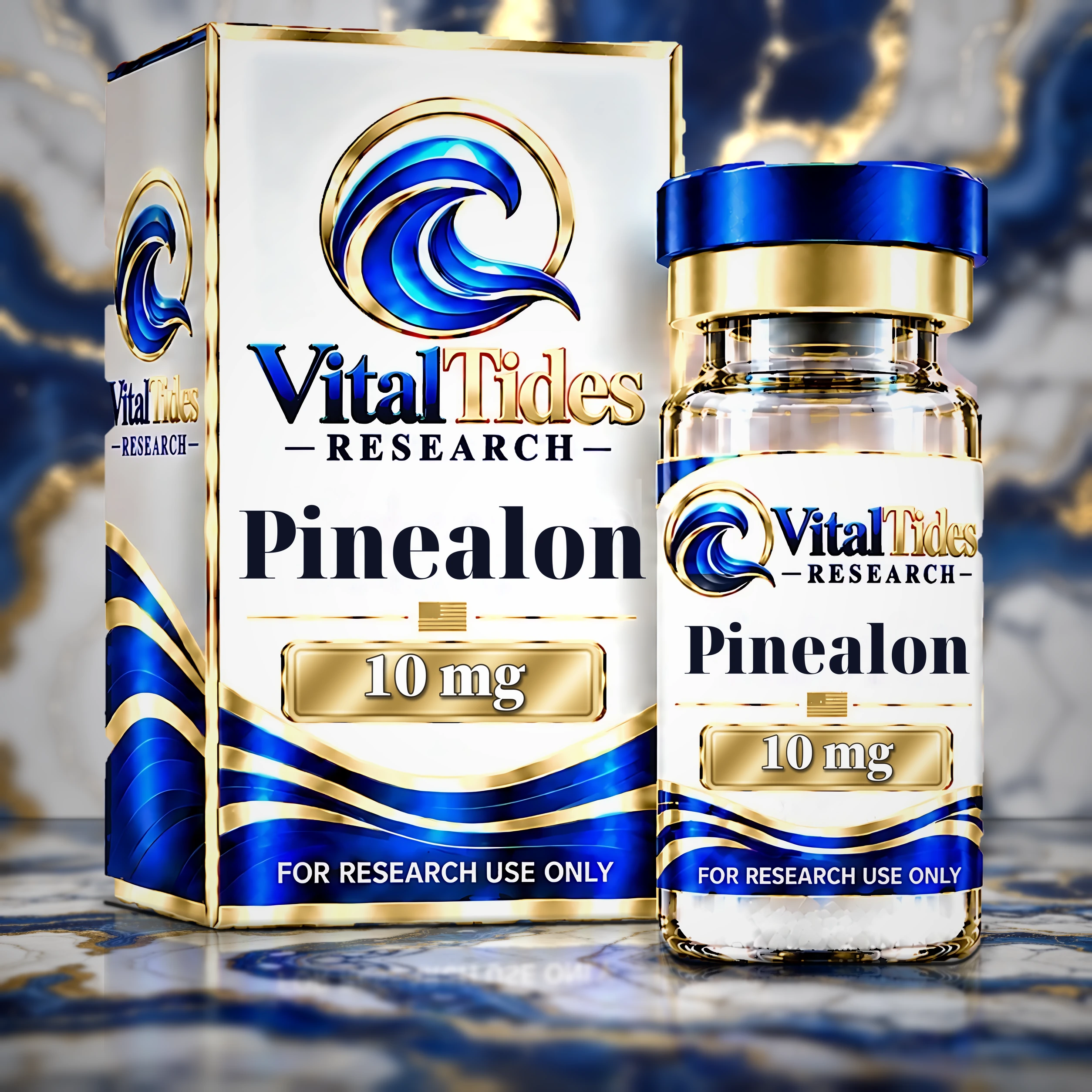
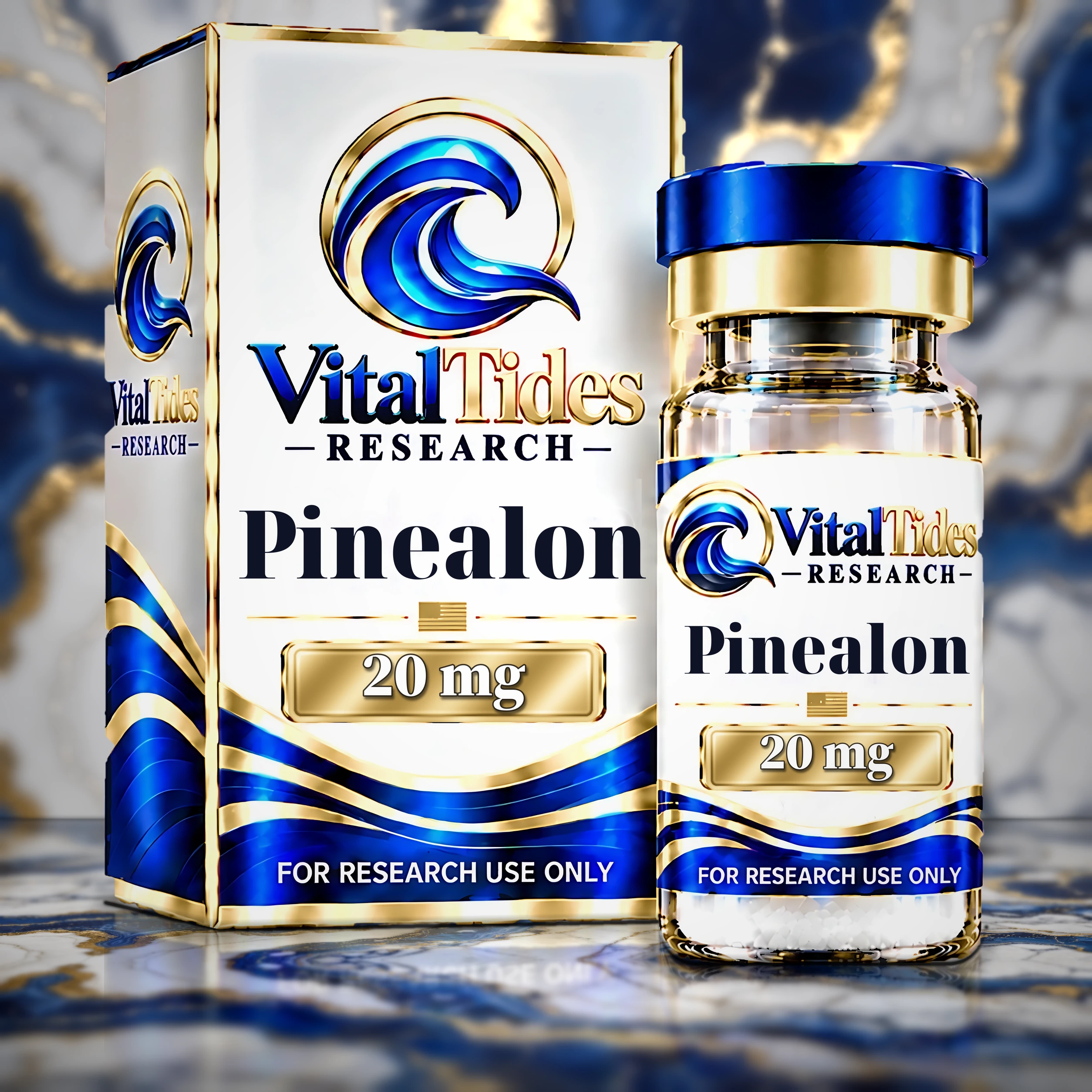
PINEALON
Price range: $45.00 through $75.00
A synthetic tripeptide (Glu-Asp-Arg) from the Khavinson bioregulator programme, studied in cell and rodent models of oxidative stress and neuroprotection.
Description
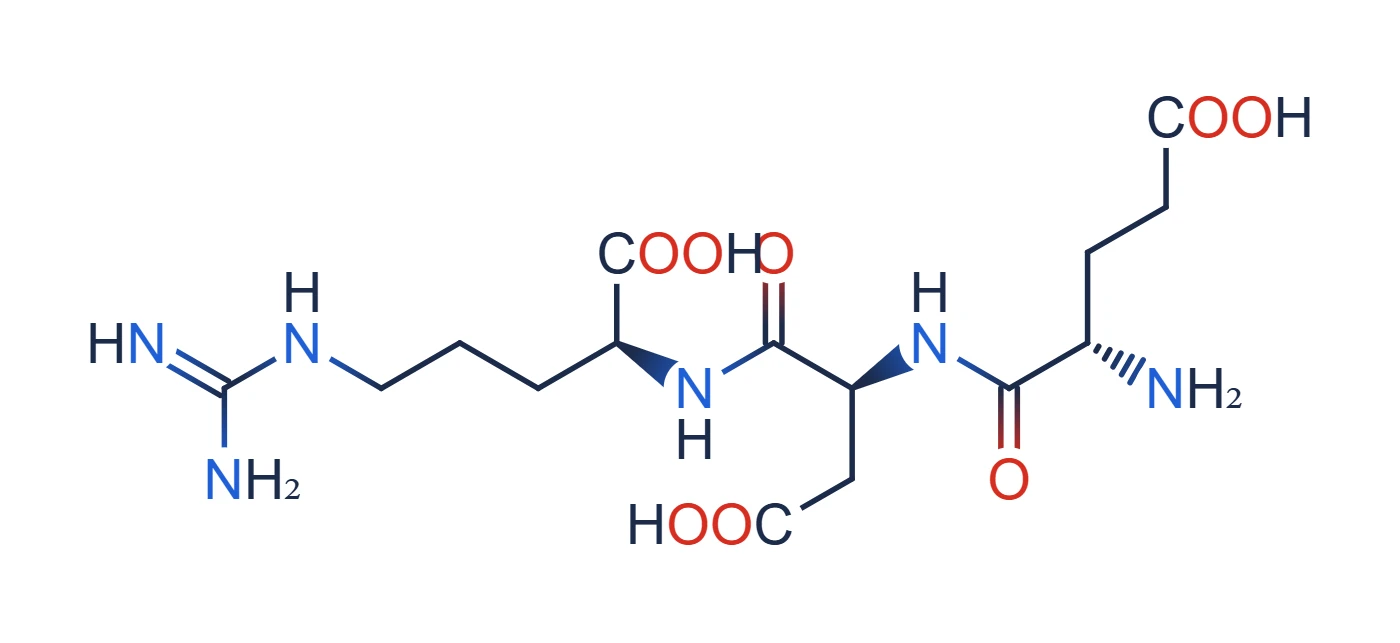
Pinealon is a tripeptide with the sequence Glu-Asp-Arg, abbreviated EDR, and a molecular weight of 418.41 g/mol. It belongs to the family of short peptide bioregulators developed within the Russian gerontology research programme.
Origin and a note on the name
Pinealon comes from the same research lineage as Epitalon, also in this catalogue: the peptide bioregulator programme associated with Vladimir Khavinson at the St Petersburg Institute of Bioregulation and Gerontology. That programme’s premise was that short peptide sequences could act as tissue-selective regulatory signals, and it produced a family of synthetic di-, tri- and tetrapeptides of which Epitalon and Pinealon are the best known in Western markets.
The name invites an assumption that should be corrected. Despite suggesting a pineal origin, Pinealon is a synthetic tripeptide, and the sources tracing its development point to Cortexin, a brain-derived peptide preparation, rather than to pineal tissue. The name reflects branding within the bioregulator series rather than the molecule’s provenance.
Structure
At three residues and 418.41 g/mol this is among the smallest molecules in the catalogue. The sequence is notably charged: glutamate and aspartate both carry negative side chains at physiological pH, while arginine carries a positive one, giving the peptide a strongly polar character. It contains no cysteine, no aromatic residues and no amidation.
The absence of aromatic residues has a practical consequence for analysis: with no tryptophan, tyrosine or phenylalanine, the peptide absorbs poorly in the near-UV range used for routine peptide detection, so quantification typically relies on detection at lower wavelengths.
Research background
The literature on Pinealon is considerably smaller than for Epitalon and shares the same structural limitation: it originates predominantly from a single research group and appears largely in Russian-language publications, with limited independent replication.
Published work has examined the peptide in cell culture systems in relation to oxidative stress endpoints, and in rodent models addressing cognitive and neuroprotective measures. Some work has investigated proposed interactions with nucleic acids, a general theme within the bioregulator programme’s theoretical framework.
No regulatory authority outside its country of origin has approved Pinealon for any use. Given the concentration of the literature, researchers should treat independent verification as a priority rather than assume the published findings generalise.
Storage and handling
Store the lyophilized powder at 36 to 46 °F (2 to 8 °C), desiccated and protected from light. Allow the vial to reach room temperature before opening.
Use 418.41 g/mol for molar calculations. At this low mass a given weight yields a large molar quantity relative to most products here.
Purity and verification
Each lot is analysed by an independent laboratory, with identity confirmed by mass spectrometry and purity by HPLC. Test scope varies by lot; consult the certificate for the lot you receive.
EDR
Additional information
| Vial Size | 10mg, 20mg |
|---|---|
| Format |
Related products
-

-
SELANK / SEMAX
$65.00 -
-
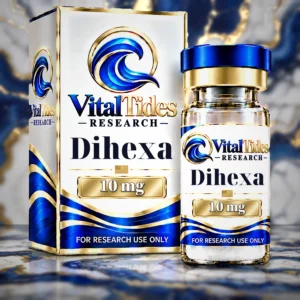
DIHEXA
Price range: $52.00 through $85.00Quick ViewSelect options This product has multiple variants. The options may be chosen on the product pageDIHEXA
Price range: $52.00 through $85.00
A lipophilic angiotensin IV derivative that binds hepatocyte growth factor and potentiates c-Met signalling, studied in neurite outgrowth and rodent cognitive models.