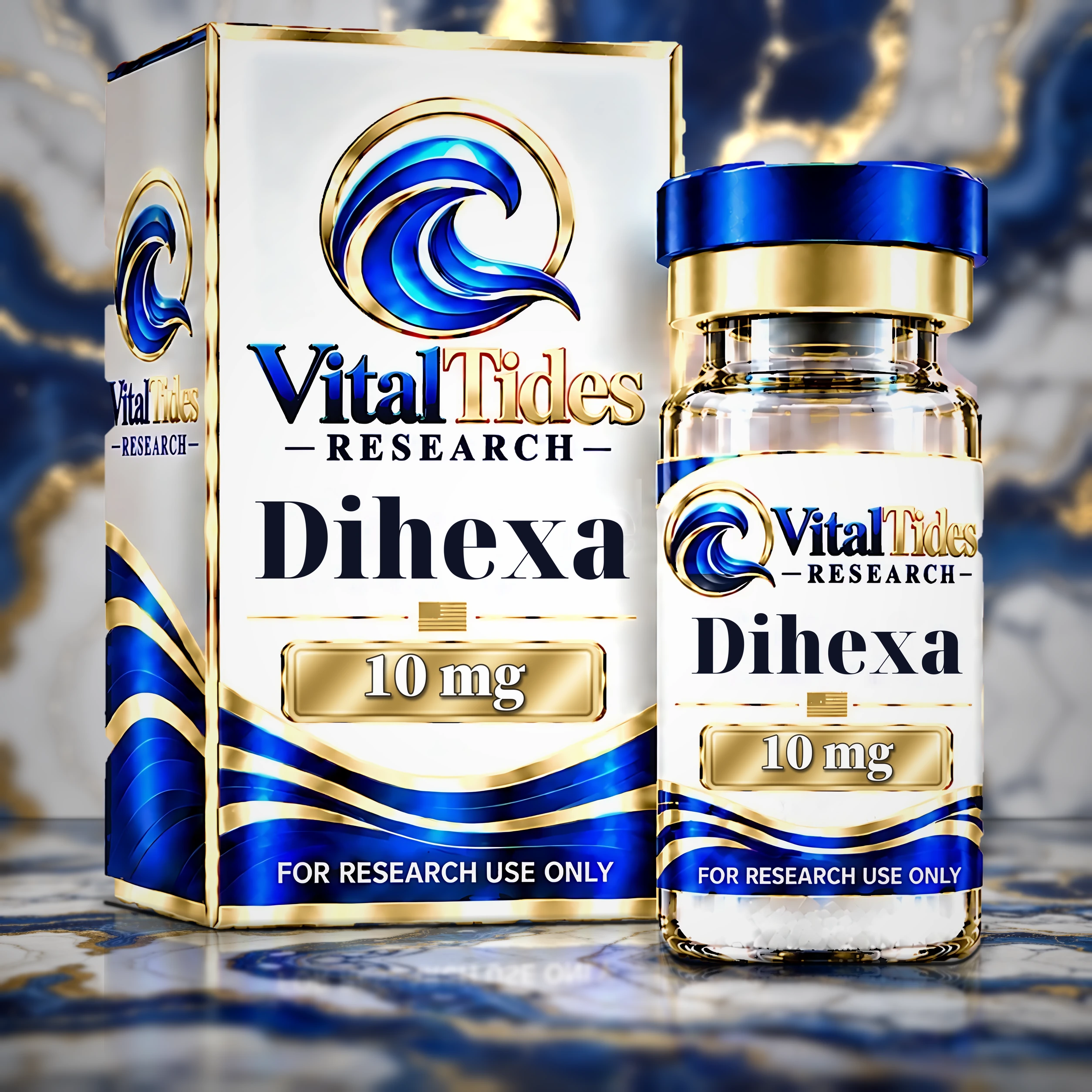
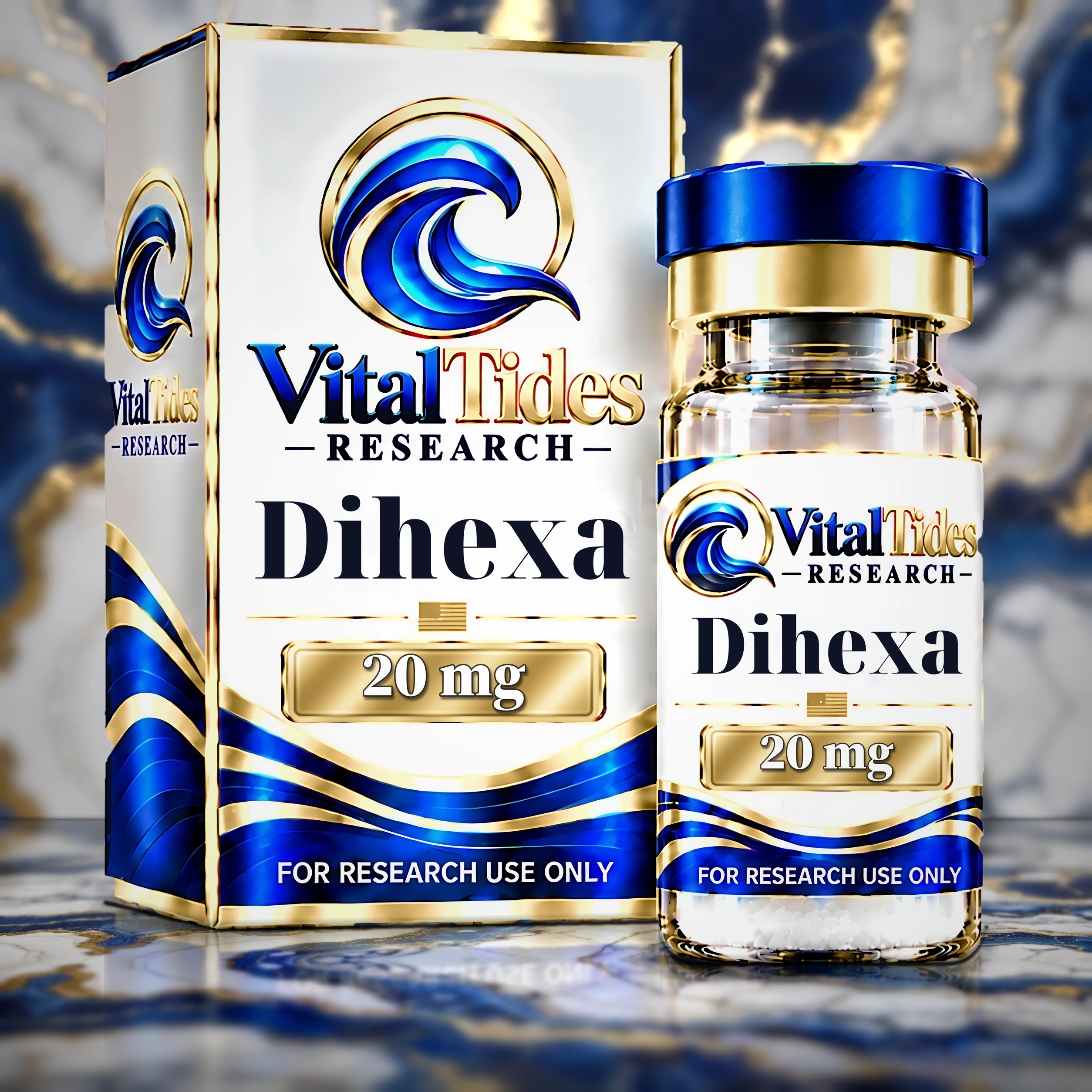
DIHEXA
Price range: $52.00 through $85.00
A lipophilic angiotensin IV derivative that binds hepatocyte growth factor and potentiates c-Met signalling, studied in neurite outgrowth and rodent cognitive models.
Description
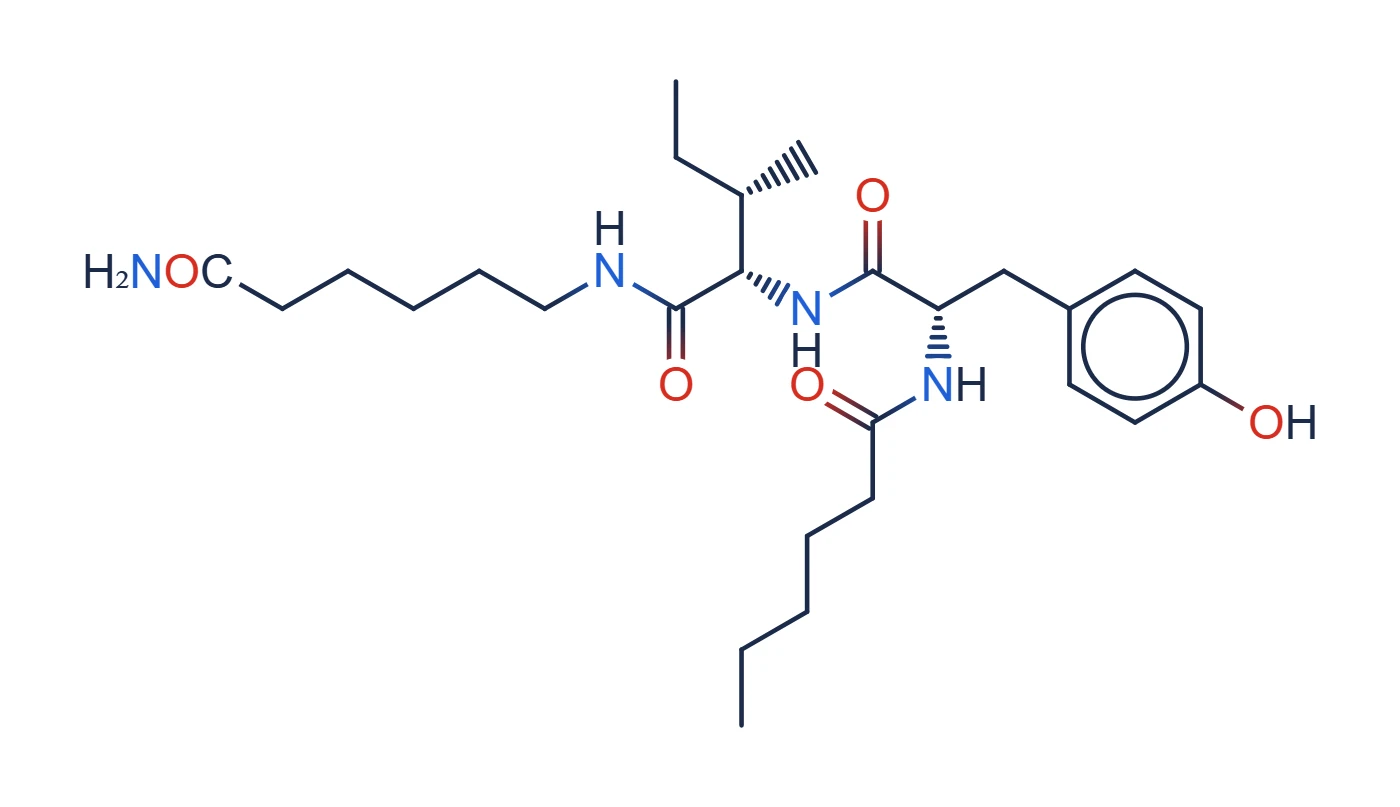
Dihexa is a modified oligopeptide with the structure Hexanoyl-Tyr-Ile-Ahx-NH₂ and a molecular weight of 504.66 g/mol. It is also designated PNB-0408, and its full chemical name is N-hexanoic-Tyr-Ile-(6)-aminohexanoic amide.
Structure
Only two of the three positions are standard amino acids. Tyrosine and isoleucine occupy the first two; the third is 6-aminohexanoic acid, a synthetic spacer with a six-carbon chain rather than a conventional side chain. A hexanoyl group caps the N-terminus and the C-terminus is amidated.
Every one of those features serves lipophilicity and stability. The hexanoyl cap and the aminohexanoic spacer both add hydrocarbon bulk, and the blocked termini resist exopeptidase attack. The design goal was a small molecule capable of crossing the blood-brain barrier, which conventional peptides do poorly.
Dihexa derives from angiotensin IV, a fragment of the angiotensin system better known for blood pressure regulation. The angiotensin IV branch of that system has been investigated separately for cognitive associations, and Dihexa is a heavily modified descendant of that line of work.
Mechanism
Published work describes Dihexa binding hepatocyte growth factor with high affinity, reported in the picomolar range, and potentiating signalling at the HGF receptor, c-Met.
This point is worth stating clearly because it is widely misreported. Dihexa is frequently described in commercial material as a BDNF-related compound. That appears to stem from a comparison in the literature, where its neurotrophic activity in an assay system was contrasted against BDNF as a benchmark. A comparison against BDNF is not action through BDNF. The described mechanism is HGF and c-Met.
Research background
Published work has characterised HGF binding in biochemical assays, examined effects on neurite outgrowth and synaptogenesis in cultured neurons, and investigated cognitive endpoints in rodent models.
The literature is small and originates largely from a limited number of groups. No regulatory authority has approved Dihexa, and it has not completed human clinical trials. Researchers should note that c-Met signalling has been studied in oncology contexts as well as neurological ones, which is relevant background when designing any experiment involving its potentiation.
Storage and handling
Store at −4 °F (−20 °C), desiccated and protected from light.
Use 504.66 g/mol for molar calculations.
Store solutions frozen and avoid repeated freeze-thaw cycles.
Purity and verification
Each lot is analysed by an independent laboratory, with identity confirmed by mass spectrometry and purity by HPLC. Test scope varies by lot; consult the certificate for the lot you receive.
Ahx = 6-aminohexanoic acid; N-terminal hexanoyl group, C-terminal amide
Additional information
| Vial Size | 10mg, 20mg |
|---|---|
| Format |
Related products
-
SELANK / SEMAX
$65.00 -

PINEALON
Price range: $45.00 through $75.00Quick ViewSelect options This product has multiple variants. The options may be chosen on the product pagePINEALON
Price range: $45.00 through $75.00
A synthetic tripeptide (Glu-Asp-Arg) from the Khavinson bioregulator programme, studied in cell and rodent models of oxidative stress and neuroprotection.
-
-