BPC-157
Price range: $65.00 through $120.00
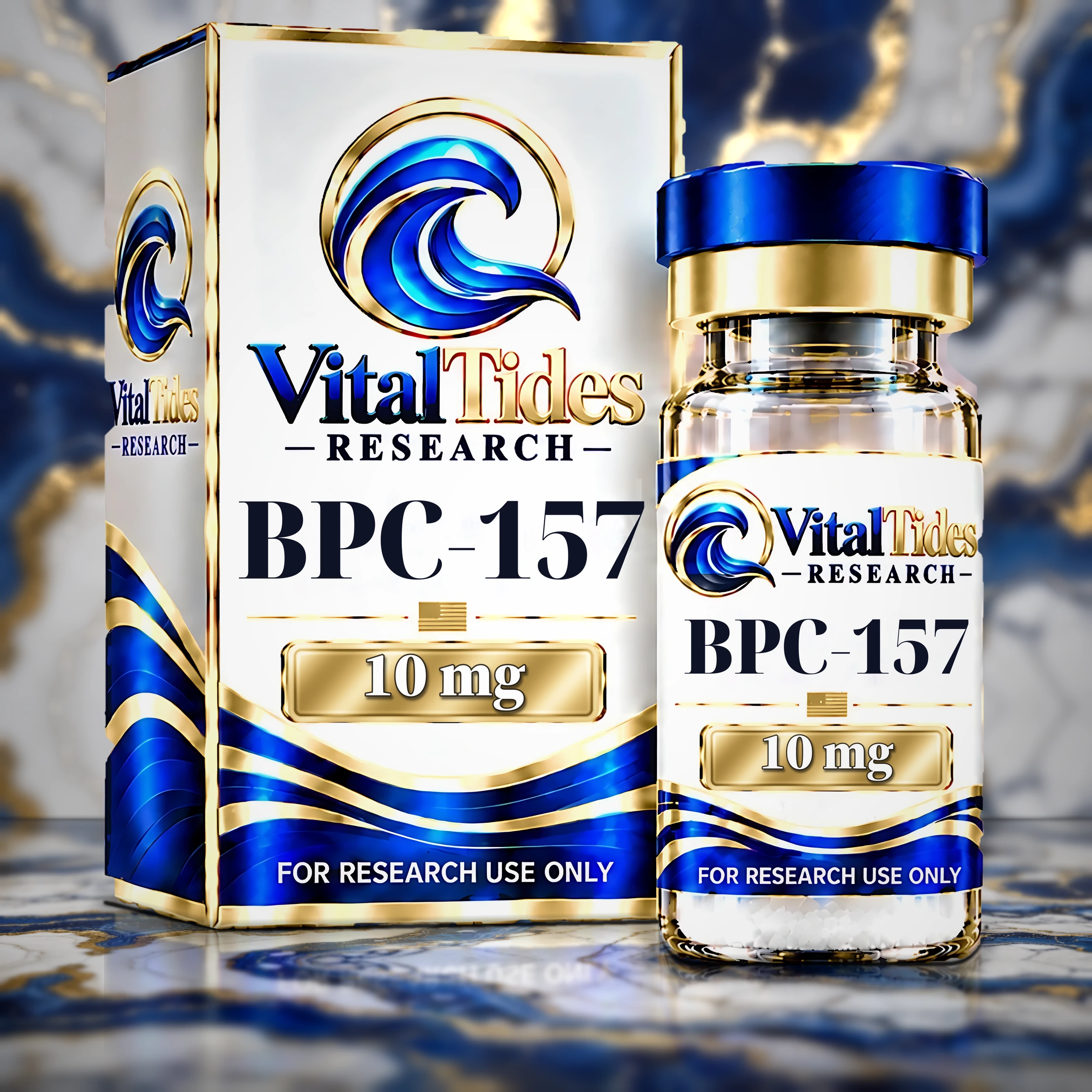
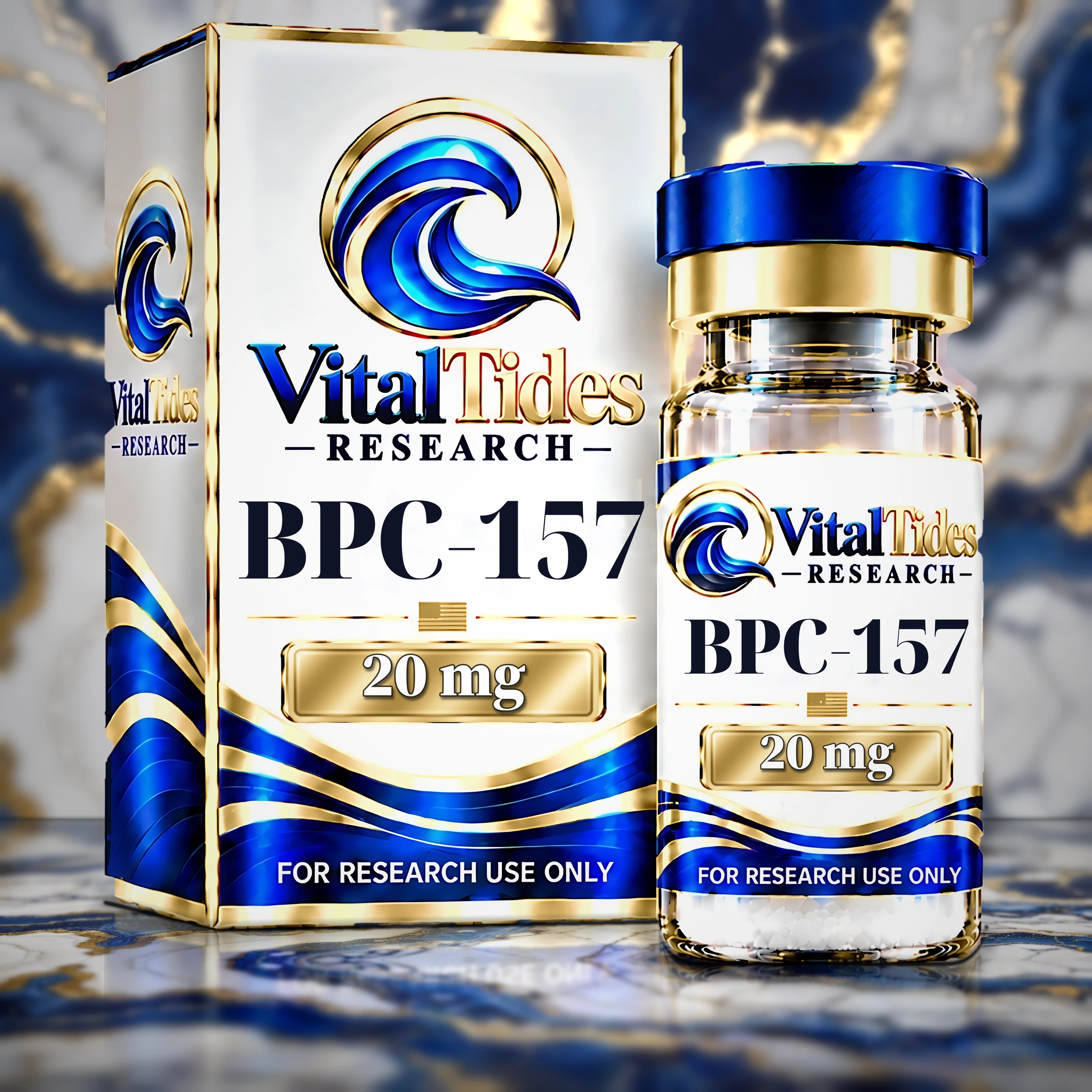
A 15-amino-acid peptide derived from a protein found in gastric juice, studied in preclinical models of tissue repair, angiogenesis and mucosal integrity. Supplied as lyophilized powder, identity confirmed by mass spectrometry.
Description
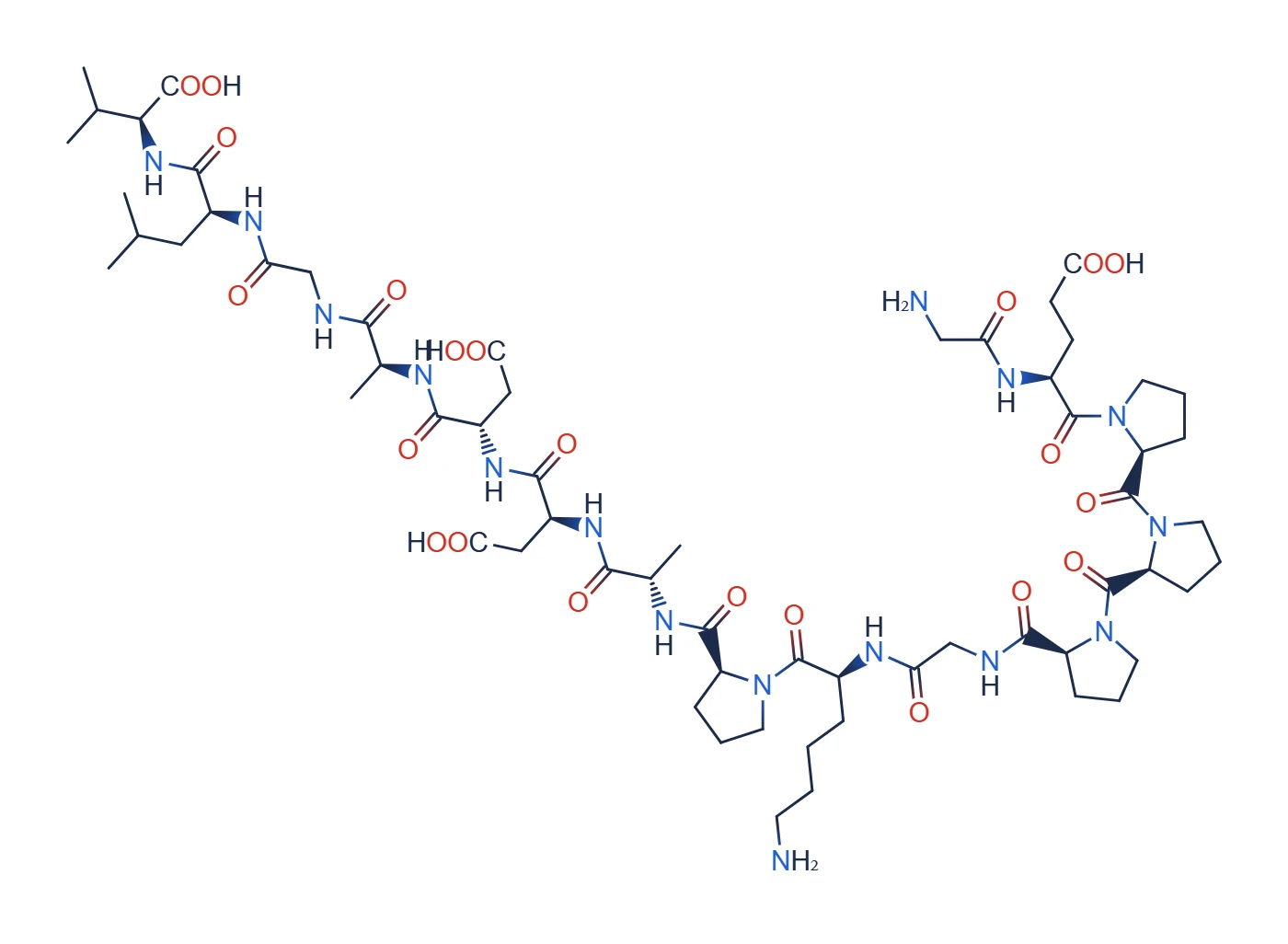
BPC-157, short for Body Protection Compound 157, is a synthetic pentadecapeptide consisting of fifteen amino acids in the sequence GEPPPGKPADDAGLV. It is derived from a partial sequence of a protective protein identified in human gastric juice, and has been produced synthetically for laboratory investigation since the 1990s. It is supplied here as a lyophilized powder for use in controlled research settings.
Structure and stability
The sequence contains no cysteine residues, which means the molecule forms no disulfide bridges and does not depend on a folded tertiary structure for its behaviour in solution. Its high proline content, with three consecutive proline residues near the N-terminus, is a notable structural feature and is frequently cited in the literature as contributing to the peptide’s relative stability compared with many peptides of similar length. Investigators have reported that it remains intact in aqueous solution under conditions that degrade less stable sequences, which is one reason it appears so widely in preclinical experimental work.
Research background
Published preclinical work on BPC-157 spans several distinct areas of investigation, and researchers should be aware that the overwhelming majority of this literature consists of animal studies, principally in rats, together with in vitro work on isolated cell populations.
The earliest and most extensive body of work concerns the gastrointestinal tract, reflecting the peptide’s origin as a fragment of a gastric protein. Investigators have examined its relationship to mucosal integrity in various experimentally induced injury models.
A second area concerns connective tissue. Laboratory studies have looked at the migration and proliferation of tendon-derived fibroblasts in culture, and at the expression of growth factor receptors in those cells. Related work has examined ligament and muscle injury models in rodents.
A third area concerns angiogenesis. Several published studies have investigated the peptide’s interaction with vascular endothelial growth factor receptor 2 signalling and downstream nitric oxide pathways, which is the mechanism most frequently proposed to account for observations across the other research areas.
Additional published work has examined the peptide in the context of central nervous system models and in studies of vascular pathways. As with all of the above, this work is preclinical.
It is important for researchers to understand the limits of this evidence base. BPC-157 has not completed human clinical trials, and no regulatory authority has approved it for any use in humans. Findings in rodent models frequently do not translate to other species. Any research design should account for this and should not extrapolate beyond what the published models support.
Storage and handling
Store the lyophilized powder at 36 to 46 °F (2 to 8 °C), desiccated and protected from light. Before opening, allow the vial to reach room temperature to prevent condensation forming inside it.
Purity and verification
Each lot is analysed by an independent laboratory. Identity is confirmed by mass spectrometry and purity by HPLC. Test scope varies by lot; consult the certificate for the specific lot you receive.
GEPPPGKPADDAGLV
Additional information
| Vial Size | 10mg, 20mg |
|---|---|
| Format |
Related products
-

TB-500
Price range: $65.00 through $140.00Quick ViewSelect options This product has multiple variants. The options may be chosen on the product pageTB-500
Price range: $65.00 through $140.00
TB-500 (Ac-LKKTETQ), the acetylated seven-residue actin-binding fragment of thymosin beta-4 (residues 17–23), supplied as a lyophilized powder for research use only.
-

GLOW
Price range: $95.00 through $105.00Quick ViewSelect options This product has multiple variants. The options may be chosen on the product pageGLOW
Price range: $95.00 through $105.00
A three-component preparation of GHK-Cu, BPC-157 and TB-500 (Ac-LKKTETQ) in one lyophilized vial. Blue powder from the copper complex; all three components confirmed by LC-MS.
-

-

GHK-CU
Price range: $46.00 through $65.00Quick ViewSelect options This product has multiple variants. The options may be chosen on the product pageGHK-CU
Price range: $46.00 through $65.00
A copper-binding tripeptide (Gly-His-Lys) supplied as the 1:1 Cu(II) complex, studied in preclinical work on extracellular matrix synthesis, gene expression and angiogenesis. Blue lyophilized powder.