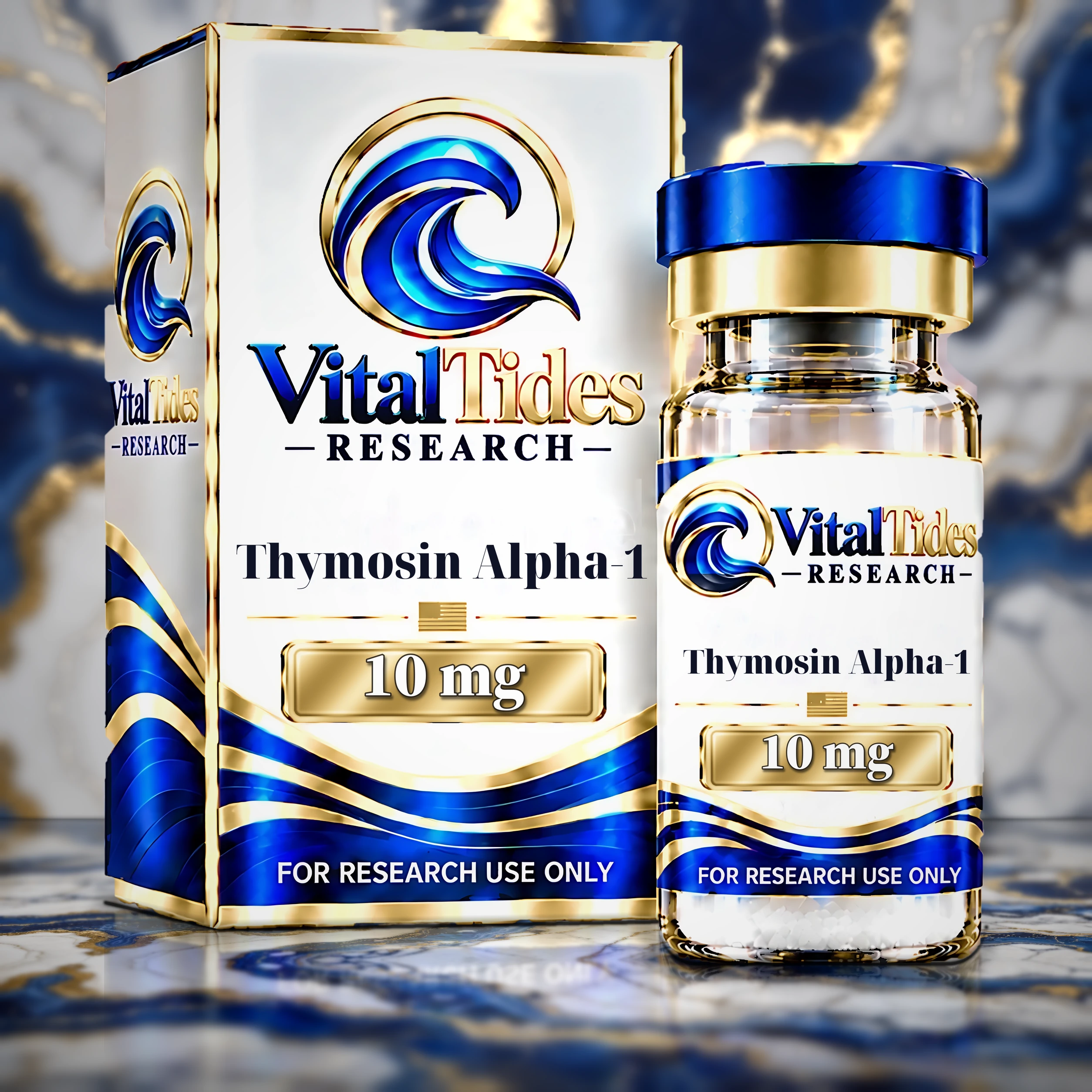
THYMOSIN ALPHA-1
$95.00
1000 in stock
A 28-amino-acid acetylated peptide from prothymosin alpha, studied in T cell maturation, toll-like receptor signalling and cytokine expression. Unrelated to thymosin beta-4.
Description
Thymosin alpha-1 is a 28-amino-acid peptide with an acetylated N-terminus and a molecular weight of 3108.28 g/mol. It is also known as thymalfasin or Tα1.
Structure and origin
Thymosin alpha-1 corresponds to residues 2 to 29 of prothymosin alpha, a 113-residue nuclear protein, and is released from that precursor by proteolytic processing. It was originally isolated from thymus tissue, which is the source of the thymosin naming.
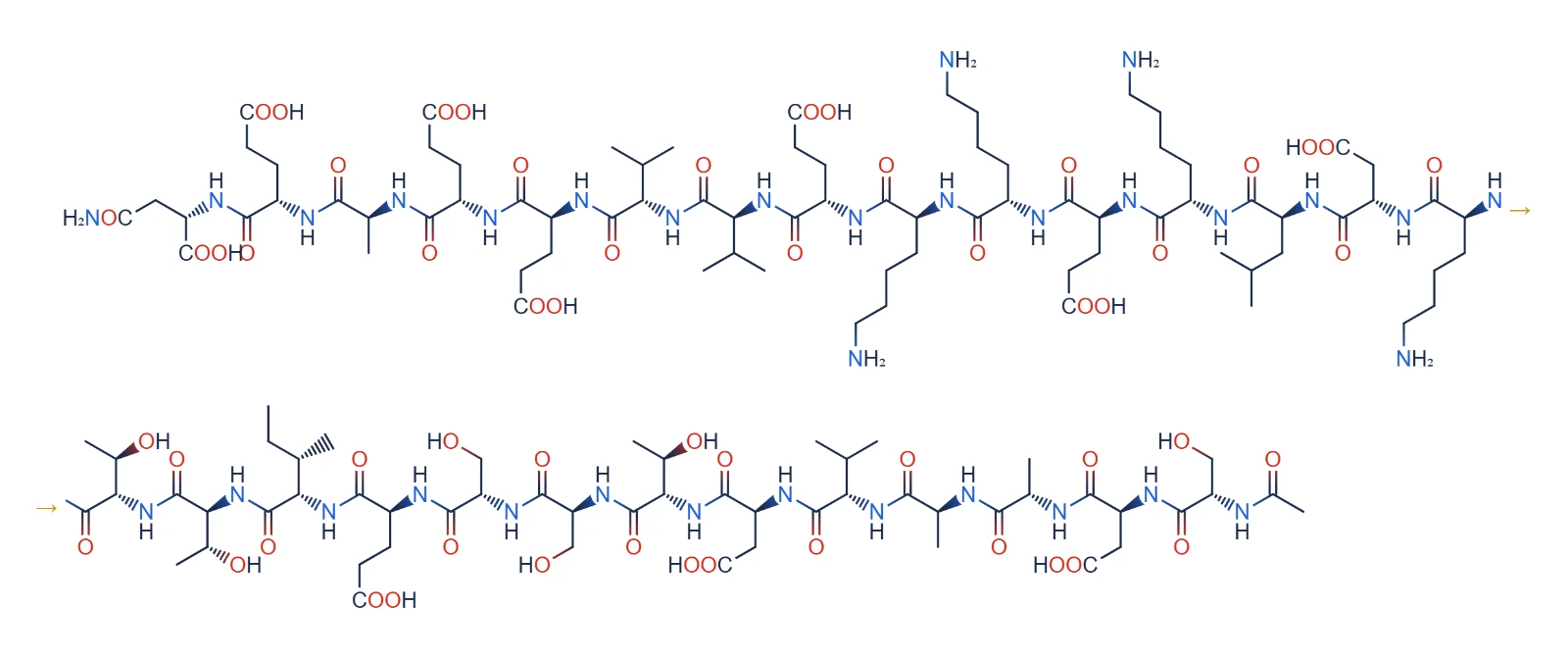
The N-terminal acetylation is part of the molecule rather than a synthesis artefact, and is included in the stated molecular formula. The sequence is strongly acidic, containing a high proportion of glutamate and aspartate residues, and contains no cysteine and therefore no disulfide bonds.
A naming caution. Thymosin alpha-1 and thymosin beta-4 share a family name but are unrelated in structure and function. Thymosin alpha-1 is a 28-residue acidic peptide from prothymosin alpha, studied in immune contexts. Thymosin beta-4 is an actin-sequestering protein; TB-500 in this catalogue is Ac-LKKTETQ, its seven-residue actin-binding fragment, studied in tissue repair contexts. The two compounds share no meaningful sequence similarity. The common name reflects the historical order in which thymus fractions were characterised, not a structural relationship.
Research background
Published work is principally immunological.
The foundational area concerns T cell populations, with in vitro work examining maturation and differentiation of thymocytes, reflecting the peptide’s thymic origin.
A second area concerns innate immune signalling, where published work has examined interaction with toll-like receptors on immune cell populations.
A third area concerns cytokine expression profiles in cell systems and animal models.
The compound is also referred to in the literature as thymalfasin. It is not approved in the United States, and the material supplied here is for laboratory research only.
Storage and handling
Store the lyophilized powder at 36 to 46 °F (2 to 8 °C), desiccated and protected from light. Allow the vial to reach room temperature before opening.
Use 3108.28 g/mol for molar calculations on the free acid; acetate salt forms carry a different mass.
Purity and verification
Each lot is analysed by an independent laboratory, with identity confirmed by mass spectrometry and purity by HPLC. Test scope varies by lot; consult the certificate for the lot you receive.
Ac-SDAAVDTSSEITTKDLKEKKEVVEEAEN
Additional information
| Vial Size | 10mg |
|---|---|
| Format |
Related products
-

-
KPV
Price range: $65.00 through $120.00Quick ViewSelect options This product has multiple variants. The options may be chosen on the product pageKPV
Price range: $65.00 through $120.00
The C-terminal tripeptide of alpha-MSH (Lys-Pro-Val), studied in cell and rodent models of inflammatory signalling without the pigmentary activity of the parent hormone.
-
-